
ACIP vaccine recommendations are the official guidelines that tell you which vaccines you need and when to get them. The Advisory Committee on Immunization Practices, a group of medical experts, reviews vaccine data and creates these schedules for the CDC. When you visit your pharmacy or doctor for a flu shot or any immunization, they follow these recommendations to protect your health. The schedules cover everyone from infants to seniors and include routine vaccines plus special considerations for people with certain health conditions.
This guide breaks down the 2025 ACIP vaccine schedules so you can understand what applies to you and your family. You’ll find the latest updates on COVID 19 vaccines, including the recent changes to individual based decision making. We’ll cover RSV and influenza guidance, explain how recommendations differ by age group, and show you how to stay current with your immunizations. Whether you’re checking if your kids need their shots or wondering about vaccines for yourself, this article gives you the practical information you need.
Why ACIP vaccine recommendations matter
ACIP vaccine recommendations shape how you access and receive immunizations across the entire healthcare system. These guidelines determine what vaccines your insurance covers, which shots your pharmacy can administer without a separate prescription, and what immunizations schools require for enrollment. When ACIP updates its recommendations, insurance companies must adjust their coverage, states review their school entry requirements, and healthcare providers modify their protocols. The committee meets three times per year to review new vaccine data and adjust schedules based on the latest safety and effectiveness research.
Coverage and access to vaccines
Your insurance plan follows ACIP guidance to decide which vaccines it covers at no cost to you. Private insurers must cover ACIP-recommended vaccines under the Affordable Care Act, and Medicare, Medicaid, and the Vaccines for Children Program use these recommendations to determine their formularies. This means changes to ACIP schedules directly affect whether you pay out of pocket for an immunization or receive it as a covered preventive service. Pharmacists also rely on these recommendations when they administer vaccines under standing orders, giving you convenient access without scheduling a doctor visit.
ACIP’s recommendations create a standard framework that ensures consistent vaccine access regardless of where you seek care.
Guidance for special populations
The committee tailors recommendations for people with specific health conditions, pregnancy status, and risk factors. If you have diabetes, heart disease, or a weakened immune system, ACIP provides modified schedules that address your increased vulnerability. Healthcare providers use these population-specific guidelines to determine the timing, number of doses, and vaccine types most appropriate for your situation.
How to use the 2025 ACIP vaccine schedules
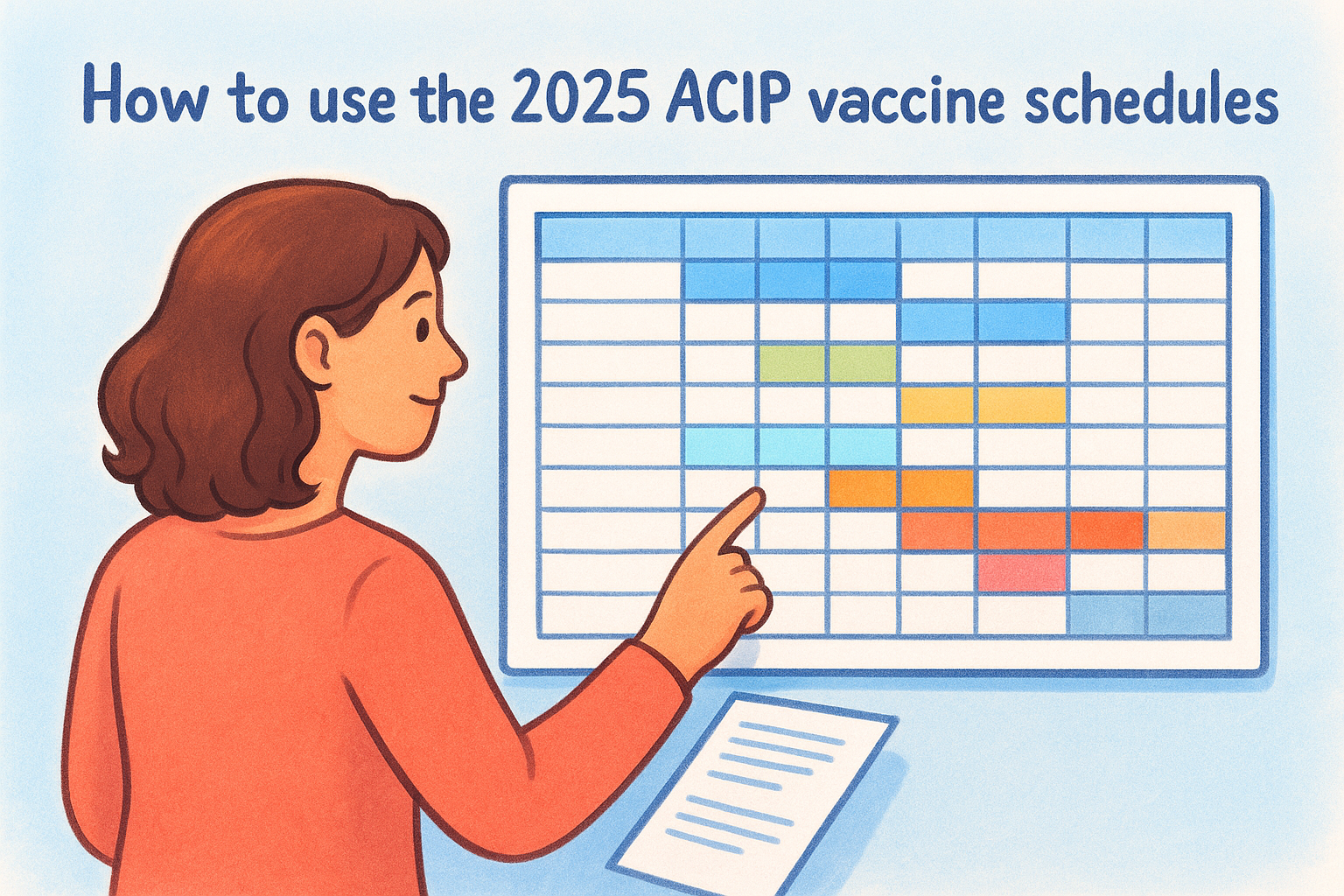
The CDC publishes two main immunization schedules based on ACIP vaccine recommendations: one for children and adolescents (birth through 18 years) and another for adults (19 years and older). You can access these schedules on the CDC’s official website, where they appear as color-coded charts showing which vaccines you need at specific ages. Each schedule lists vaccines in rows and age groups in columns, with colored boxes indicating when to receive each dose. Your healthcare provider uses these same charts during wellness visits to verify your immunization status and identify any missing doses.
Finding your age-specific schedule
Start by identifying which schedule applies to you or your family member. The child and adolescent schedule covers birth through age 18, breaking down recommendations by months for infants and years for older children. Adult schedules organize vaccines by age groups (19-26, 27-49, 50-64, and 65+ years) and include special notes for pregnant individuals and those with certain health conditions. Look for the footnotes below each chart, which provide crucial details about dosing intervals, brand preferences, and exceptions for people with weakened immune systems or other medical situations.
The footnotes contain essential information that determines exactly when and how you should receive each vaccine dose.
Understanding vaccine timing and intervals
ACIP schedules specify minimum intervals between doses for multi-dose vaccine series. If you or your child missed a vaccine at the recommended age, you can use the catch-up schedule to determine the appropriate timing for delayed doses. The schedules also indicate maximum ages for certain vaccines, such as the HPV vaccine’s upper age limit and specific windows for childhood immunizations. Pay attention to shaded boxes that show recommended ages versus catch-up periods, helping you distinguish between routine timing and acceptable alternatives when you’re behind schedule.
2025 COVID 19 vaccine updates you should know
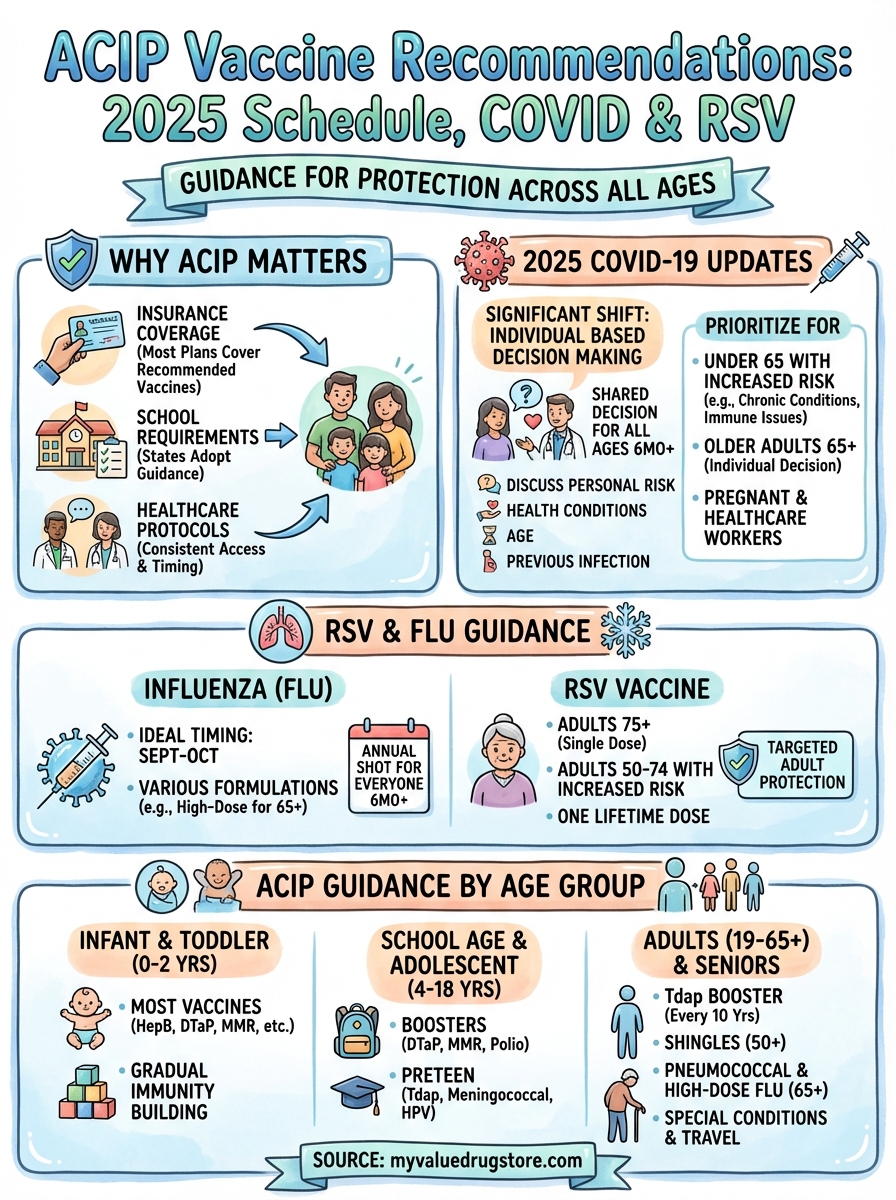
ACIP made a significant change to COVID-19 vaccine recommendations in September 2025, shifting from universal recommendations to individual based decision making for all ages six months and older. This update means you and your healthcare provider now determine together whether COVID-19 vaccination makes sense for your specific situation. The change affects how you access vaccines, what your insurance covers, and the conversations you have with your pharmacist or doctor before getting vaccinated. Despite this shift, COVID-19 vaccines remain available through all payment mechanisms, including the Vaccines for Children Program, Medicaid, Medicare, and private insurance plans.
Individual decision-making for COVID-19 vaccination
Under the new ACIP vaccine recommendations, shared clinical decision making replaces the previous universal vaccination guidance. You work with your healthcare provider, whether a physician, nurse, or pharmacist, to evaluate your personal risk factors and health circumstances before deciding on vaccination. Your provider should discuss the benefits and potential risks specific to your situation, considering factors like your age, underlying health conditions, and previous COVID-19 infections. This approach gives you more control over your healthcare decisions while ensuring you receive information tailored to your needs.
The shift to individual decision making recognizes that COVID-19 risk varies significantly across different populations.
Who should prioritize COVID-19 vaccines
ACIP emphasizes that people under 65 with increased risk factors for severe COVID-19 benefit most from vaccination. The CDC maintains a list of risk factors including chronic conditions like diabetes, heart disease, obesity, and immune system disorders. If you’re 65 years or older, the committee notes that vaccination based on individual decision making applies, though older adults generally face higher risks from COVID-19 complications. Pregnant individuals, healthcare workers, and those living in congregate settings should discuss their elevated exposure risk with providers when considering vaccination timing and frequency.
2025 RSV and flu vaccine guidance at a glance
The 2025 ACIP vaccine recommendations maintain routine annual influenza vaccination for everyone six months and older and continue targeted RSV vaccination for specific adult populations. Unlike the recent COVID-19 changes, these guidelines remain straightforward universal or age-based recommendations rather than individual decision making. You can get both vaccines during the same visit if you’re eligible, and most pharmacies and clinics stock both throughout the fall and winter respiratory virus season. Insurance coverage follows the standard ACIP framework, meaning these vaccines cost you nothing out of pocket when received from in-network providers.
Influenza vaccine recommendations
You should receive one flu shot each year, regardless of which vaccine you got in previous seasons. ACIP recommends vaccination for all people six months and older with no upper age limit, making it the most universally applied vaccine on the schedule. The committee specifies timing between September and October as ideal, though you can get vaccinated later in the season if you missed the early window. Different flu vaccine formulations exist for various age groups, including high-dose options for adults 65 and older that provide stronger immune responses.
Annual flu vaccination protects you and reduces the spread of influenza in your community.
RSV vaccine for older adults
RSV vaccination targets adults 75 years and older with a single-dose recommendation, plus adults ages 50 to 74 who face increased risk for severe RSV disease. Risk factors include chronic heart or lung conditions, weakened immune systems, diabetes, and other conditions that make respiratory infections more dangerous. You only need one RSV vaccine in your lifetime under current ACIP vaccine recommendations, unlike the annual flu shot. Talk with your pharmacist or provider about whether you qualify based on your age and health status.
ACIP vaccine guidance by age group
ACIP vaccine recommendations organize vaccines into age-specific schedules that match your immune system development and disease risk at different life stages. Your vaccination needs change dramatically from infancy through older adulthood, with distinct timing requirements, dose counts, and vaccine types for each age bracket. Understanding your age group’s specific guidance helps you identify which vaccines you need now versus which ones you completed in childhood. Healthcare providers use these age-based categories to quickly assess your immunization status and catch any gaps in your protection.
Infant and toddler vaccine schedule
You receive the most vaccines during your first two years of life when your immune system needs help fighting diseases that pose serious risks to babies. The schedule starts at birth with the hepatitis B vaccine and continues with multiple visits at 2, 4, 6, 12, and 15-18 months. Your baby gets combination vaccines like DTaP (diphtheria, tetanus, pertussis) and the MMR (measles, mumps, rubella) to reduce the number of shots needed at each visit. ACIP schedules these doses at specific intervals to build immunity gradually while your child’s immune system matures.
Completing the infant and toddler series on schedule provides the strongest protection during the most vulnerable early months of life.
School age children and adolescent vaccines
School entry requires proof of certain vaccinations based on ACIP guidance that most states adopt into their enrollment requirements. Your child needs booster doses of several vaccines between ages 4-6 years, including DTaP, MMR, varicella (chickenpox), and polio vaccines. The preteen years (ages 11-12) bring additional vaccines like Tdap (tetanus booster), meningococcal, and HPV that protect against diseases more common in adolescents and young adults. Catch-up schedules help teenagers who missed earlier doses get current before entering college or the workforce.
Adult vaccine recommendations by decade
Your adult vaccination needs depend primarily on your age, health status, and previous immunization history. Adults ages 19-26 can still receive the HPV vaccine if not completed earlier, while Tdap boosters every 10 years apply to all adults. Once you reach 50 years, you become eligible for the shingles vaccine, and at 65, you should receive pneumococcal vaccines plus the high-dose flu shot. ACIP vaccine recommendations for adults also include situation-specific guidance for pregnancy, international travel, occupational exposure, and chronic health conditions that increase your disease risk.
Staying up to date with vaccines
Keeping track of acip vaccine recommendations helps you maintain protection against preventable diseases throughout your life. Your local pharmacy can check your immunization status, identify any missing doses, and administer vaccines during a convenient appointment. Most people find it easier to get vaccinated at their pharmacy rather than scheduling separate doctor visits, especially for routine immunizations.
Value Drugstore provides comprehensive vaccination services in a personalized setting where pharmacists take time to answer your questions and discuss your specific needs. Visit our pharmacy for expert immunization consultations and convenient access to all recommended vaccines.