Prescription costs drain your wallet fast. You pick up a medication and suddenly face a bill that forces you to choose between filling the script or paying other bills. Insurance helps some people, but copays still bite. Others have no coverage at all and stare at full retail prices that can run hundreds of dollars for a single bottle.
Generic prescriptions offer a way out. The same active ingredients that work in brand name drugs cost 80 to 85 percent less when you buy the generic version. But getting that savings takes more than just asking for generics. You need to know where to look, how to compare prices across pharmacies, and which discount programs actually deliver.
This guide walks you through four practical steps to cut your prescription costs. You’ll learn why generics cost less, how to make sure your doctor prescribes them, where to find the lowest prices, and how to stack discounts for maximum savings. By the end, you’ll have a clear plan to afford the medications you need.
Why generic prescriptions cost less
Generic drugs contain the same active ingredients as brand name medications but sell for a fraction of the price. Brand name companies invest millions in developing new drugs, running clinical trials, and marketing their products. They recoup these costs by charging premium prices while their patent protects them from competition.
Patents give brand names a 17-year monopoly
When a pharmaceutical company invents a new drug, it receives patent protection for roughly 17 years. During this window, no other company can manufacture or sell that medication. The original manufacturer sets the price without competition, often charging hundreds or thousands of dollars per prescription to recover development costs and generate profits.
Multiple manufacturers create price competition
Once the patent expires, other companies can apply to produce affordable generic prescriptions of the same medication. These generic manufacturers skip the expensive research phase because the brand name company already proved the drug works. They only need to demonstrate their version matches the original drug’s quality, strength, and effectiveness. Multiple companies then compete for your business by lowering prices.
Generic medications must pass FDA testing for quality, strength, purity, and potency before reaching pharmacy shelves.
The result? You pay 80 to 85 percent less for generics while getting identical therapeutic benefits as the brand name version.
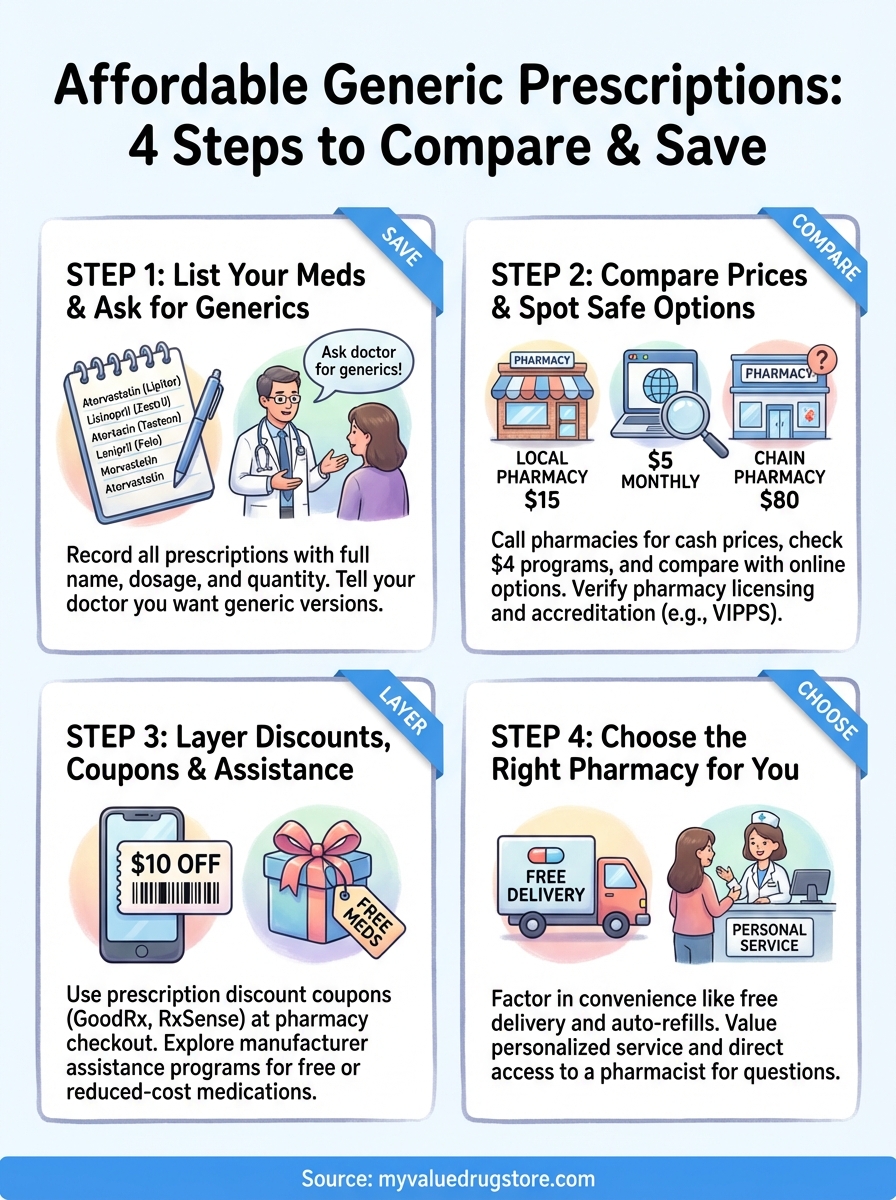
Step 1. List your meds and ask for generics
You cannot compare prescription prices effectively until you know exactly what medications you take and whether generic versions exist. Start by creating a complete list of your current prescriptions. This simple step prevents confusion at the pharmacy and helps you spot savings opportunities before you even request a refill.
Write down every medication you take
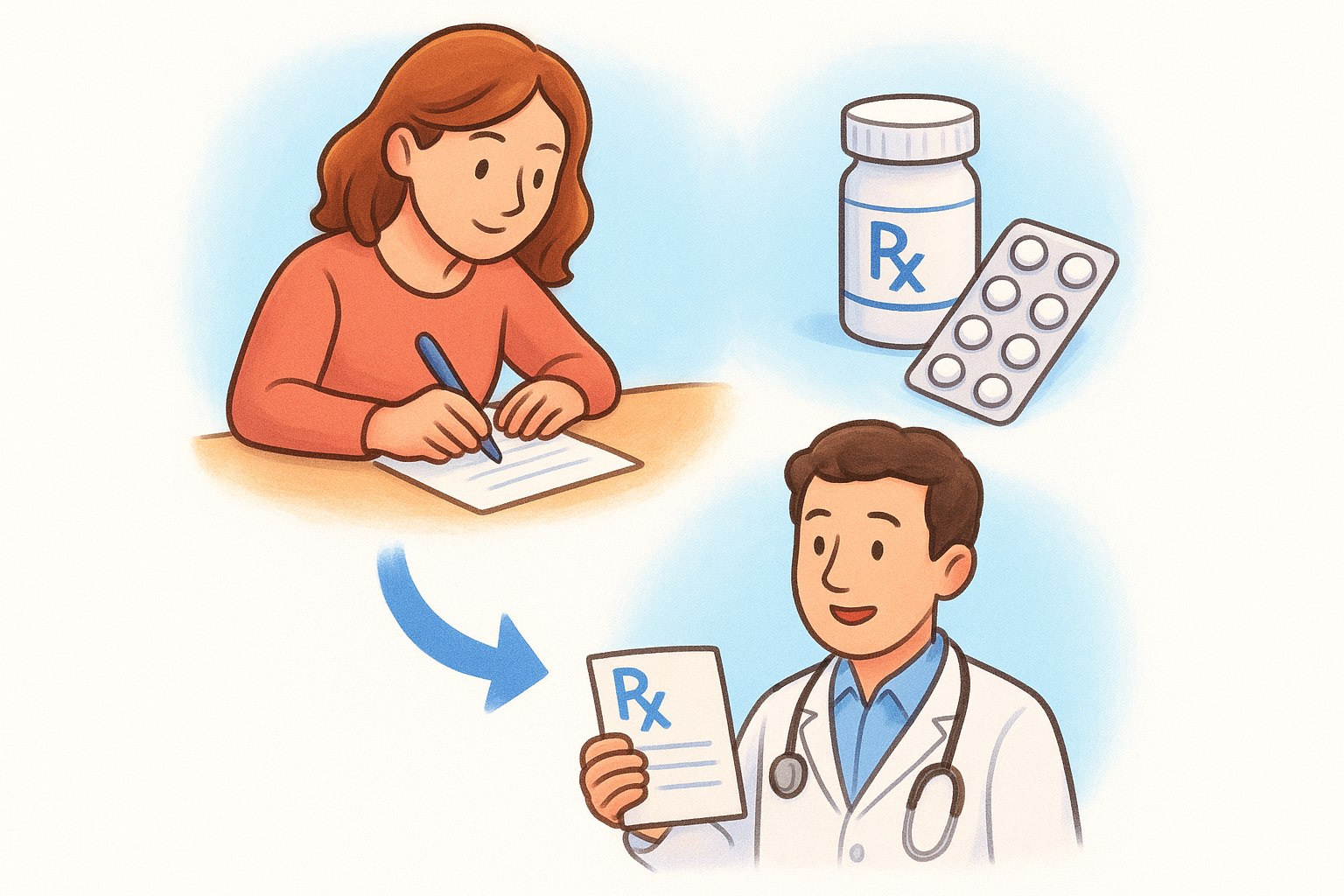
Grab a piece of paper or open a note on your phone. List each prescription with its full drug name, dosage, and quantity. Include medications you take daily, weekly, or as needed. Use this template to organize your information:
- Drug name: [Brand or generic name currently prescribed]
- Strength: [Example: 10mg, 500mg]
- Quantity: [Example: 30 tablets, 90 capsules]
- Frequency: [Example: once daily, twice daily]
Tell your doctor you want generics
Call your doctor’s office or bring your medication list to your next appointment. Say directly: "I want generic versions of my medications when they’re available." Ask your doctor to write prescriptions that allow pharmacists to substitute generics automatically. Most doctors support this request because they understand generic drugs provide identical therapeutic benefits at lower prices.
Doctors can specify "dispense as written" to require brand names, but they rarely need to do so unless you have a specific allergy or medical reason.
Step 2. Compare prices and spot safe options
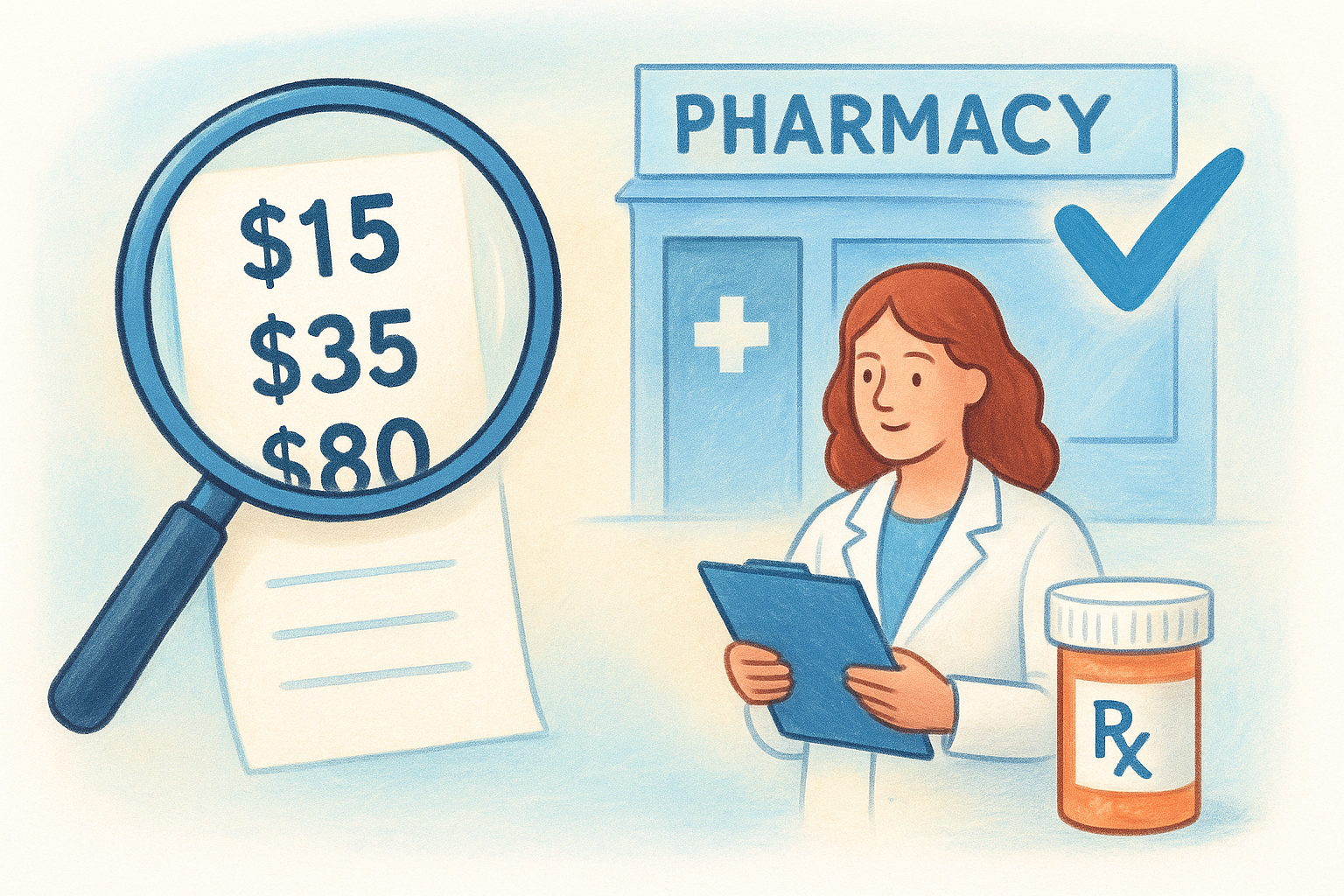
Prices for the same generic prescription vary wildly between pharmacies. One pharmacy charges $15 while another charges $80 for identical medication. This happens because each pharmacy sets its own prices, and no central system exists to regulate generic drug costs. You must check prices at multiple pharmacies to find the best deal.
Check prices at multiple pharmacies
Call at least three pharmacies in your area and ask for the cash price of each medication on your list. Specify the exact drug name, strength, and quantity. Write down every quote you receive. Many pharmacies offer $4 generic programs that beat insurance copays. Walmart, Kroger, and similar chains maintain lists of common generics available for $4 (30-day supply) or $10 (90-day supply).
Online pharmacies also compete for your business. Amazon RxPass charges $5 monthly for unlimited access to common generics if you have Prime membership. Mark Cuban Cost Plus Drug Company publishes transparent pricing that often undercuts retail pharmacies. Compare these options against local stores to find affordable generic prescriptions that fit your budget.
Always verify a pharmacy holds proper state licensing before placing your first order.
Spot red flags that signal problems
Legitimate pharmacies require a valid prescription from your doctor. Walk away from any website or service that offers to sell you prescription medications without verifying your prescription. These operations break federal law and may ship counterfeit or dangerous products. Safe pharmacies display their state license number prominently on their website and answer questions about their pharmacists.
Check for VIPPS (Verified Internet Pharmacy Practice Sites) accreditation when buying online. The National Association of Boards of Pharmacy grants this seal to pharmacies that meet safety and quality standards. Skip deals that seem impossibly cheap or promise overnight shipping without proper documentation.
Step 3. Layer discounts, coupons, and assistance
You can stack multiple savings strategies to drive prescription costs even lower. Discount coupons work separately from insurance, so you can choose whichever option saves you more money. Manufacturer assistance programs add another layer of savings for people who qualify. Combining these tools turns expensive prescriptions into affordable generic prescriptions that fit your budget.
Find and apply prescription discount coupons
Prescription discount cards function like coupons that reduce your out-of-pocket cost at the pharmacy counter. GoodRx, RxSense, and similar services negotiate bulk pricing with pharmacies and pass savings to you. Visit their websites, search for your medication, and compare prices at participating pharmacies near you. The site generates a coupon code you can print or show on your phone.
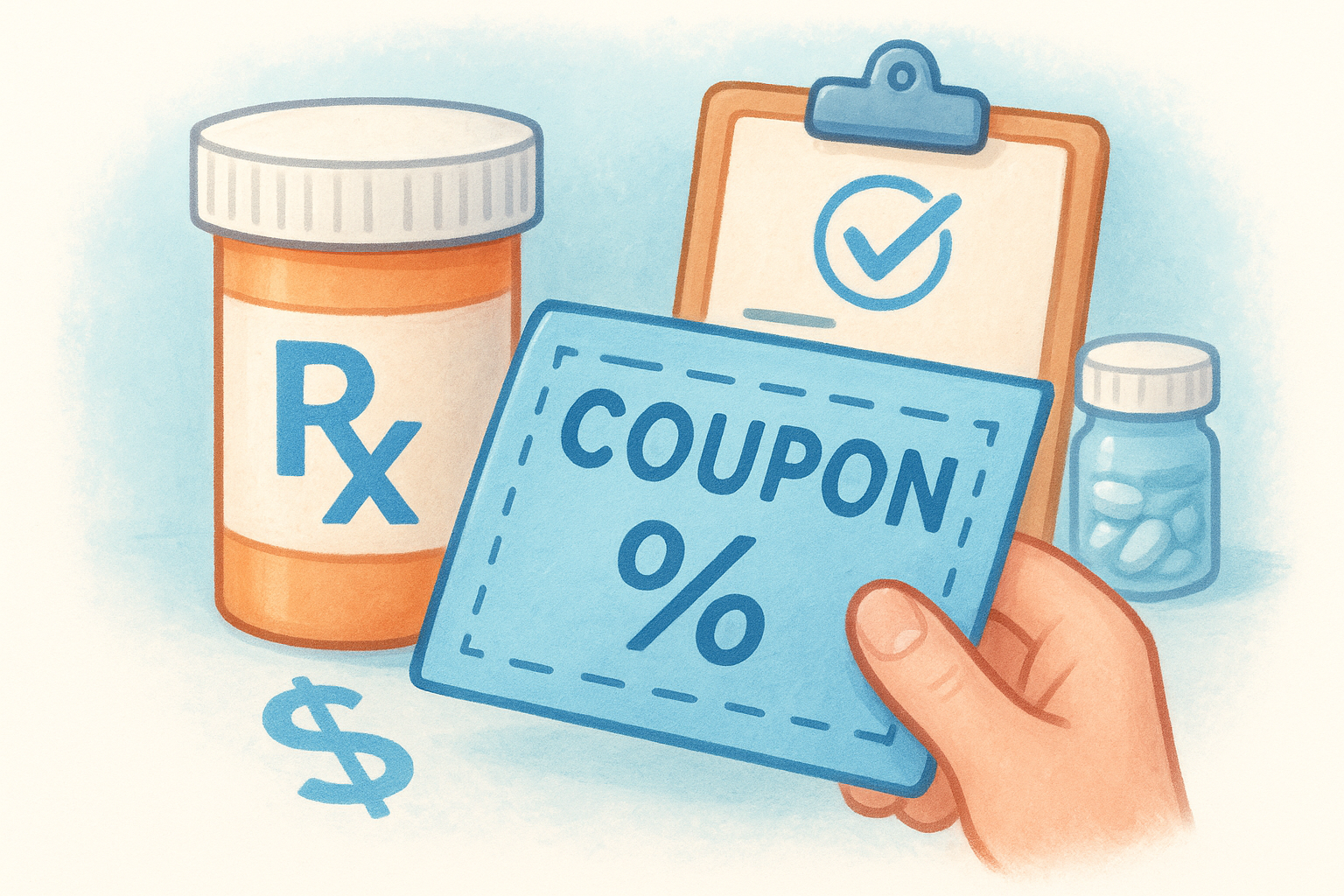
Hand this coupon to your pharmacist when you drop off your prescription. Tell them you want to pay the cash discount price instead of using insurance if the coupon saves you more money. Walgreens integrates RxSense directly into their Rx Savings Finder tool to simplify this process. Check prices every time you refill because pharmacy pricing changes monthly.
Discount coupons are not insurance and work independently of your coverage, so you choose the better deal each time.
Check manufacturer assistance programs
Pharmaceutical companies offer free or reduced-cost medications to people who meet income requirements or lack insurance coverage. Visit the PhRMA Medicine Assistance Tool to search for programs that cover your specific medications. You complete an application that asks about your household income and insurance status. Approval takes two to four weeks, and the manufacturer ships medications directly to your home or doctor’s office.
Step 4. Choose the right pharmacy for you
Price matters, but convenience and service quality determine whether you stick with a pharmacy long term. A pharmacy that saves you five dollars but makes refills complicated wastes your time. You need a pharmacy that combines affordable generic prescriptions with services that fit your daily routine and health needs.
Factor in delivery and refill convenience
Check whether the pharmacy offers free prescription delivery to your home. This service saves you time and gas money, especially for monthly refills. Ask how the pharmacy handles automatic refills and whether they send reminders when prescriptions run low. Some pharmacies let you order refills through mobile apps or websites, which beats waiting on hold during phone calls.
Build a relationship with your pharmacist
Local independent pharmacies give you direct access to pharmacists who remember your name and medical history. These pharmacists spot potential drug interactions and answer questions about side effects without rushing you. They often provide personalized medication reviews that help you manage complex prescriptions better than chain stores where you speak to different staff each visit.
Pharmacists can answer medication questions, suggest over-the-counter alternatives, and flag potential problems your doctor might miss.
Make a plan for your next refill
Pick one medication from your list and follow steps one through four before your next refill date. Call three pharmacies to compare prices, check discount coupons online, and verify which option saves you the most money. Write down the winning pharmacy’s name and discount method you’ll use. Repeat this process for each prescription on your list over the next three months.
Value Drugstore combines personalized pharmacist consultations with competitive pricing on affordable generic prescriptions. Visit us in Belvedere Square or call to discuss your medication needs and discover how much you can save.