Better Health Through Routine: Mastering Your Medication Schedule
Practical Medication Adherence Tips: Manage Prescriptions, Protect Your Health, and Get Pharmacy Support
Medication adherence means taking your medicine as your prescriber instructed — the right dose, at the right time, for the full course. When you follow your medication schedule, treatments work better, complications are less likely, and hospital visits drop. Research shows missed or inconsistent doses worsen chronic conditions and increase costs, so understanding why people miss doses and how to fix it matters. This guide walks you through how medication adherence works, the common reasons doses are missed, and practical routines, tools, and pharmacy support services that make taking medicine simpler. You’ll find side-by-side comparisons of pill organizers, apps for medication reminders, and dispensers, clear checklists to prevent interactions, and cost-saving ideas to keep therapy going. We also explain how local pharmacy support services — online refills, delivery, compounding, and telehealth — remove barriers and support long-term prescription management. Read on for straightforward, step-by-step ways to improve medication adherence and protect your health.
Understanding Medication Adherence: Why It Matters for Your Well-being
Medication adherence describes how closely someone follows a prescribed medication schedule and timing. Staying on schedule keeps medicine levels steady so treatments can do their job and lowers risk. Good adherence helps stabilize disease markers, prevents flare-ups, and reduces the chance of hospitalization — all of which improve daily routine and long-term outcomes. Clinicians and researchers often track adherence using measures like medication possession ratio (MPR) and proportion of days covered (PDC) to identify people who may need extra pharmacy support. Better adherence produces measurable benefits: improved blood pressure, tighter blood sugar control for diabetes, and fewer breathing episodes for people with chronic lung disease. Understanding why doses are missed helps you and your care team choose the right fix — whether that’s a behavior change, a tech tool, or system-level support for taking medicine.
Common Barriers to Medication Adherence: Why Taking Medicine is Missed
People miss medicines for predictable reasons: cost, forgetfulness, side effects, complicated medication schedules, limited access, and unclear instructions. High out-of-pocket costs can lead to skipped refills or cut doses. Busy or irregular routines make doses easy to forget, especially for older adults or people with memory challenges. Side effects sometimes cause intentional stopping, and multiple daily doses increase the chance of mistakes when taking medicine. Transportation, mobility, or scheduling problems interrupt supply, and low health literacy can make directions confusing. Identifying the main barrier for each person lets pharmacists and prescribers offer targeted solutions — simpler regimens, medication reminders, counseling, or financial help for better prescription management.
Medication Adherence & Chronic Disease: A Critical Connection for Taking Medicine Consistently
For chronic conditions, consistent taking medicine is often what keeps the illness under control and prevents complications. For example, taking medicine for blood pressure regularly lowers the risk of stroke and heart attack; steady diabetes medicines reduce long-term complications; and consistent asthma treatment cuts acute flare-ups. Research links better medication adherence with improved test results — lower A1c in diabetes, lower LDL with statins, and steadier peak flow in asthma — and fewer emergency visits. For patients, that translates to fewer bad days, fewer hospital stays, and more ability to stay active. A tailored adherence plan — matched to the condition, the medicines, and the person’s daily routine — delivers real health and cost benefits.
Essential Tools & Strategies for Better Medication Adherence and Taking Medicine Effectively
Medication adherence becomes easier when simple daily routine habits are paired with tools that reduce mental effort and system friction. Effective approaches for taking medicine consistently include linking doses to daily activities, setting visual or audible medication reminders, simplifying your regimen with the prescriber, and using pharmacy support services to sync refills. Each method targets a common cause of missed doses — forgetfulness, complexity, access, or cost — and combining approaches usually works best. Below are high-impact strategies you can start using right away for better prescription management.
- Tie medication schedule times to daily routine habits like meals or brushing your teeth so taking medicine becomes part of your routine.
- Use a pill organizer or automatic dispenser to pre-sort doses and cut down on daily decisions for taking medicine.
- Set alarms or use a medication reminders app to remind you and keep a record of doses taken.
- Synchronize prescriptions so several medicines refill on the same date and reduce pharmacy trips, enhancing prescription management.
- Ask for pharmacist counseling or a telehealth medication review to simplify your regimen and manage side effects, leveraging pharmacy support.
These tactics work together: pairing a pill organizer with app medication reminders and synchronized refills creates multiple safety nets against missed doses, improving overall medication adherence. The next sections compare common tools and help you choose what fits your life for effective taking medicine.
Pill Organizers & Dispensers: Simplifying Your Daily Doses for Better Medication Adherence
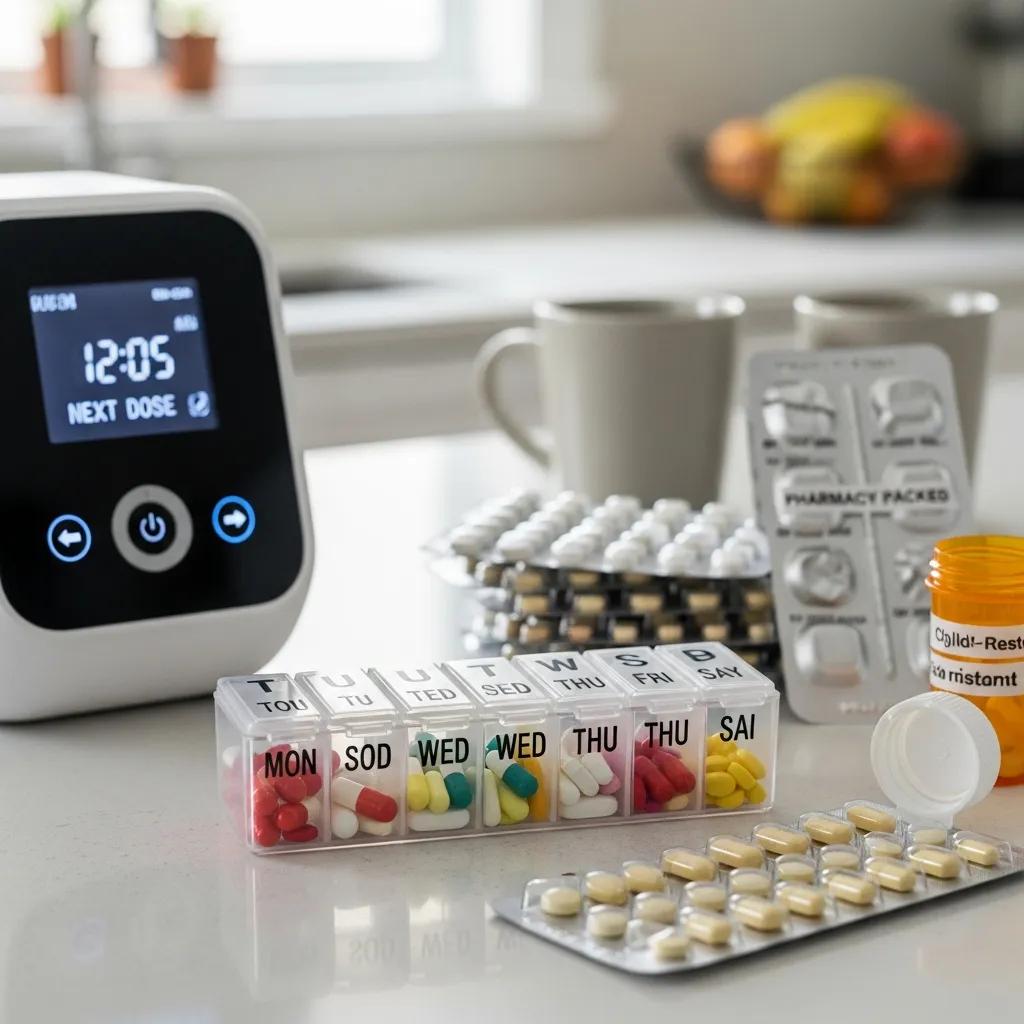
Pill organizers and automatic dispensers reduce the daily mental load by sorting doses ahead of time and, in some models, alerting you when it’s time to take them. A weekly pill organizer works well for steady, once-daily routines; electronic dispensers with alarms and locks support people with complex medication schedules or memory needs. Best practices: fill your pill organizer the same day each week, check expiration dates, and confirm the organizer matches current prescriptions after any change. If you take many medicines, pharmacy-packed blister packs or synchronized fills can cut setup errors and simplify taking medicine and prescription management.
Below is a quick comparison that highlights ease of use, cost, and ideal situations for each option.
| Tool Type | Ease of Use | Best For |
|---|---|---|
| Weekly pill organizer | High | Simple, once-daily regimens |
| Electronic dispenser | Medium | Complex schedules, cognitive support |
| Blister packs (pharmacy-packed) | High | Multiple daily medications, synchronization |
| Automatic pill dispenser w/ alarms | Medium | Patients needing timed alerts |
This comparison helps you match a tool to your routine and medication complexity so you can pick the most usable option for long-term medication adherence and consistent taking medicine.
Top Medication Reminder Apps: Stay on Your Medication Schedule and Improve Adherence
Medication reminder apps combine alarms, tracking, and refill alerts to keep doses consistent and provide logs caregivers or clinicians can review. Look for apps with flexible scheduling, persistent alerts that continue until you confirm the dose, refill reminders tied to your supply, and privacy controls for sharing data. Some apps link to wearables for gentle nudges and create adherence reports useful in pharmacy or telehealth conversations. When choosing an app, favor simplicity, reliable notifications, and refill integration so it actually reduces missed doses and eases communication with your pharmacy support team for better taking medicine.
Using a medication reminder app alongside a physical pill organizer gives you redundancy — and redundancy makes medication adherence more reliable over time for consistent taking medicine.
Designing Effective Medication Reminder Apps for Daily Routines
A functionality review of hundreds of reminder apps shows which features best support everyday medication habits.
Don’t forget your pill! Designing effective medication reminder apps that support users’ daily routines, K Stawarz, 2014
Navigating Polypharmacy: Safe & Effective Prescription Management for Medication Adherence
Managing many medicines — called polypharmacy — requires a system for effective prescription management to prevent interactions, duplicate therapies, and scheduling conflicts while keeping care convenient and safe. A master medication list that includes prescriptions, over-the-counter items, and supplements is the foundation for pharmacist and prescriber reviews to spot risks. Timing strategies, appropriate combination products, and syncing refill dates can reduce complexity in your medication schedule. Pharmacist-led medication reviews and medication therapy management (MTM) evaluate whether each medicine is still needed, suggest simplifications, and monitor for side effects. Pairing a clear medication schedule with pharmacy support for packing or synchronization turns a complex regimen into something manageable for consistent taking medicine and improved medication adherence.
Use the checklist below for practical steps to manage multiple medications safely.
- Create and keep a complete medication list including prescriptions, OTCs, and supplements for better prescription management.
- Review the list with your pharmacist to find interactions, duplications, or chances to simplify, leveraging pharmacy support.
- Use timing strategies (morning/evening separation) to lower interaction risk and improve tolerability when taking medicine.
- Ask about prescription synchronization or pharmacy packing to cut down on dispensing complexity and boost medication adherence.
This checklist turns general advice into immediate actions that lower interaction risk and support adherence. The table below outlines common interaction risks and practical management tips.
| Medication/Tool | Interaction Risk | Management Strategy |
|---|---|---|
| Warfarin + NSAIDs | Increased bleeding risk | Avoid concurrent NSAIDs; use acetaminophen; close INR monitoring |
| ACE inhibitor + Potassium supplement | Hyperkalemia risk | Monitor electrolytes; adjust doses; pharmacist review |
| Statin + Certain antibiotics | Increased myopathy risk | Check interactions before starting antibiotics; consider alternative agents |
| Multivitamin + Iron | Absorption interference | Space iron and calcium-rich products by 2 hours |
Preventing Interactions & Managing Side Effects for Safe Medication Adherence
The first step is straightforward: tell your pharmacist and prescriber about every prescription, OTC medicine, vitamin, and herbal supplement you take. Pharmacists use interaction tools to flag risky combinations and can recommend monitoring, dose changes, or safer alternatives. Practical tips include spacing interacting drugs, avoiding risky OTC choices, and watching for warning signs like unusual bleeding, muscle pain, or changes in thinking. When starting a new medicine, ask for pharmacy support for a review and a list of symptoms to report so problems can be fixed quickly and therapy can continue for consistent taking medicine.
Open communication with your pharmacist makes monitoring easier and speeds up solutions when issues arise, reducing interruptions in care.
Crafting Your Medication Schedule for Complex Regimens and Better Adherence
Build a medication schedule by anchoring each medication to a daily routine event — breakfast, lunch, bedtime — and group drugs by time to lower confusion. Make a simple chart listing drug name, dose, time, and why you take it; this becomes the reference for caregivers, clinic visits, and pharmacy checks. If you have many daily doses, ask your prescriber about longer-acting options or combination pills and coordinate fills so everything arrives together. Pharmacy support for packaging and synchronization turn the chart into a physical plan that fits your daily routine and reduces missed or duplicate doses, improving medication adherence and prescription management.
A clear schedule plus pharmacist support turns a complicated plan into steady daily habits and reduces medication errors.
Intelligent Pill Organizer for Enhanced Medication Adherence in Chronic Diseases
A proposed automatic dispenser uses visual and audio alerts to organize and remind patients, improving timely medication administration — especially for older adults and people with chronic conditions.
Intelligent Pill Organizer for Smart Medicine Reminder and Enhanced Adherence, P Sinthia, 2025
Partnering with Your Care Team: Pharmacists & Doctors for Enhanced Medication Adherence and Pharmacy Support
Clear, proactive conversations with pharmacists and doctors improve medication adherence by explaining why each medicine matters, addressing side effects, and fitting treatment to your life. Pharmacists can counsel you, suggest lower-cost options, and run medication reviews that reconcile lists and recommend simplifications, providing crucial pharmacy support. Regular check-ins — in person or by telehealth — catch problems early and allow timely changes that keep you on therapy. Coming prepared with questions and sharing your medication chart makes visits more productive and increases the chance you’ll stick with the plan for consistent taking medicine.
Talking openly with your care team creates a positive cycle: what you share today helps avoid problems tomorrow.
Key Questions to Ask Your Pharmacist for Better Medication Adherence and Pharmacy Support
Bring a short list of focused questions to make the most of pharmacy support counseling. Ask what each medicine does and how long you’ll take it; how and when to take it; what to do if you miss a dose; and which side effects are common or serious. Ask about lower-cost generics or synchronized fills to reduce hassle and cost, and whether any OTC products or supplements should be avoided. Request written instructions or a medication schedule chart for home use. These questions give you practical details to follow therapy confidently and spot problems early when taking medicine.
Bring your medication chart and insurance information to each visit to make counseling quick and actionable.
Telehealth for Personalized Medication Counseling and Pharmacy Support

Telehealth makes medication counseling more convenient by letting pharmacists and prescribers review medicines, check side effects, and make dose changes without travel — especially helpful for people with mobility or access challenges. Through telehealth, your care team can assess medication adherence barriers, suggest dose consolidation or alternative formulations, and schedule follow-ups more often when needed. Paired with online refills and delivery, telehealth recommendations can be filled and sent quickly so patients don’t miss doses, enhancing pharmacy support for taking medicine.
Used as an adherence tool, telehealth promotes continuity and fast problem-solving so patients stay on track with treatment.
Telehealth Interventions Improve Medication Adherence in Chronic Diseases
Systematic reviews show that phone outreach, text reminders, and remote consultations can help people with diabetes, hypertension, and dyslipidemia stick to their medicines.
Impact of telehealth interventions on medication adherence for patients with type 2 diabetes, hypertension, and/or dyslipidemia: a systematic review, JM Bingham, 2021
Value Drugstore: Your Partner in Medication Adherence and Pharmacy Support
Value Drugstore offers community-focused services designed to remove common medication adherence barriers by combining convenience, personalization, and affordability. Our core services include easy online prescription refills with pharmacist review, free medication delivery to remove transportation obstacles, personalized compounding for easier-to-take formulations, and telehealth consultations for timely medication reviews. Each service solves a practical problem: online refills and auto-refill reduce missed doses, free delivery removes access barriers, compounding helps those with swallowing or dosing needs, and telehealth provides quick follow-up and troubleshooting, all contributing to better prescription management and taking medicine consistently. This is our commitment to comprehensive pharmacy support.
Our approach is simple: when pharmacy services reduce friction and provide personal attention, people find it easier to keep taking their medicines as prescribed.
Streamlined Refills & Free Delivery: Enhancing Access and Pharmacy Support for Taking Medicine
Online refills let you request renewals from home, triggering pharmacist verification and preparation for pickup or delivery without an extra trip. Auto-refill and refill medication reminders lower the risk of running out by prompting timely action or starting the process automatically for chronic meds. Free delivery removes transportation and time barriers that often cause missed refills, bringing medicines to your door on schedule and reducing gaps in therapy. Together, these features keep treatment continuous and improve medication adherence by providing essential pharmacy support for taking medicine.
Combining online refills with reliable delivery closes common access gaps that lead to missed doses and interruptions.
Personalized Compounding & Telehealth: Tailored Pharmacy Support Solutions for Medication Adherence
Compounding lets pharmacists tailor medicine forms to your needs — for example, turning a pill into a liquid for easier swallowing, adding child-friendly flavors, or combining ingredients when clinically appropriate. Telehealth complements compounding by allowing quick medication reviews, dose changes, and counseling about new formulations without delay. Coordinating telehealth with pharmacy fulfillment helps ensure compounded products are made correctly and delivered on time, minimizing disruption. Together, compounding and telehealth offer personalized solutions that remove real-world barriers to taking medicine as prescribed, significantly boosting medication adherence through dedicated pharmacy support.
These services show how a local pharmacy can adapt to individual needs and support long-term adherence through tailored care.
Overcoming Cost Barriers: Affordable Medication Strategies with Pharmacy Support for Adherence
Cost often causes people to skip or ration medicines. Practical steps can lower out-of-pocket expenses while keeping therapy on track for better medication adherence. Ask about safe generic alternatives, use manufacturer coupons or pharmacy discount programs, enroll in prescription assistance or co-pay relief, and talk with your pharmacist about therapeutic substitutions or bulk dispensing. Pharmacists can also help with insurance navigation — explaining formularies, prior authorizations, and step therapy — so you avoid delays. Over-the-counter supplements may support general health, but they don’t replace prescribed medicines and should be reviewed with a pharmacist to avoid interactions. This comprehensive pharmacy support is vital for effective prescription management and consistent taking medicine.
Here are straightforward cost-reduction strategies you can pursue with pharmacy support.
- Ask your pharmacist about clinically equivalent generics or lower-cost alternatives, a key aspect of pharmacy support.
- Check pharmacy discount programs, coupons, and manufacturer assistance to reduce copays for taking medicine.
- Sync refills and consider 90-day supplies when appropriate to lower dispensing costs and improve medication adherence.
- Ask pharmacy staff for help with insurance issues like prior authorizations or formulary questions, utilizing available pharmacy support.
Used together with pharmacist guidance, these steps can meaningfully reduce financial barriers and help patients stay on therapy. The table below summarizes common program types and benefits.
| Program/Option | Eligibility | Benefit |
|---|---|---|
| Generic substitution | Broad | Lower cost for equivalent therapy |
| Pharmacy discount programs | Varies by pharmacy | Immediate out-of-pocket savings |
| Manufacturer assistance | Income/insurance criteria | Reduced copays or free medication |
| Free delivery & refill support (Value Drugstore) | All patients using service | Removes delivery costs and access barriers |
Prescription Programs & Insurance Navigation for Medication Adherence and Pharmacy Support
Affordable prescription options and insurance assistance connect patients to discounts, match medicines to formularies, and clear administrative roadblocks that delay treatment. Pharmacists can check for manufacturer help or pharmacy discounts, suggest formulary-friendly alternatives, and work with prescribers on prior authorization paperwork, offering vital pharmacy support for prescription management. Practical next steps are simple: bring your insurance card to the pharmacy, ask the pharmacist to review cost-saving options, and sign up for refill medication reminders or auto-refill to avoid running out. These actions reduce direct costs and lower the chance of missed doses from unaffordable refills, significantly improving medication adherence and consistent taking medicine.
Working with pharmacy staff turns confusing insurance processes into real savings strategies that keep patients on their medicines.
The Role of Natural Supplements (with caution) in Your Medication Schedule
Natural supplements can help fill nutritional gaps or support general wellness, but they aren’t substitutes for prescribed medications. Some supplements interact with prescriptions — for example, herbal products that affect clotting or drug metabolism — so always check with your pharmacist before starting anything new. When chosen and monitored appropriately, supplements may improve energy, digestion, or nutrient status, which can indirectly support your ability to follow a treatment plan and medication schedule. Talk with your pharmacist to make sure supplements are safe and won’t reduce your medicines’ effectiveness, utilizing their pharmacy support.
Used thoughtfully and under pharmacy review, supplements can support overall health without interfering with prescribed therapies.
Frequently Asked Questions (FAQs) about Medication Adherence and Taking Medicine
Consequences of Poor Adherence
Poor medication adherence can lead to serious health problems, including disease progression, more hospitalizations, and higher healthcare costs. Patients may notice worsening symptoms, more frequent flare-ups of chronic conditions, and a greater risk of emergencies. Non-adherence can also make treatments seem ineffective and frustrate both patients and providers. Understanding the importance of sticking with prescribed regimens and consistently taking medicine is key to achieving better health and avoiding preventable complications.
Communicating Medication Concerns
Effective communication starts with honesty and preparation. Before your appointment, list questions or concerns — side effects, trouble taking medicine doses, or any health changes. Share your full medication history, including over-the-counter drugs and supplements. This helps your provider give tailored advice, adjust your plan if needed, and make sure you understand each medicine’s role, often with valuable pharmacy support.
Improving Adherence in Children
Helping children stay on track with medication adherence usually means teamwork with parents, caregivers, and providers. Create a consistent daily routine, use colorful pill organizers or timers, and consider small rewards for adherence. Explain medicines in child-friendly language and involve kids when appropriate. Family-focused medication reminder apps or shared charts can also keep parents and children synchronized with dosing schedules for consistent taking medicine.
Managing Medication Side Effects
If you notice side effects, contact your healthcare provider or pharmacist promptly. They can assess severity and decide if dose adjustments or alternative treatments are needed. Don’t stop a medication without professional advice, as that can worsen your condition. Keep a brief record of symptoms — when they started and how strong they are — to help your care team make an informed decision, often with pharmacy support.
Ensuring Medication Safety & Interactions
Keep an up-to-a-date list of all prescriptions, over-the-counter medicines, and supplements you use, and share it with your healthcare provider and pharmacist. They can check for potential interactions and advise how to manage them, providing essential pharmacy support for safe prescription management. Using one pharmacy for all prescriptions helps pharmacists monitor interactions and gives you a single point of contact for safety questions related to taking medicine.
The Power of Support Groups
Support groups offer emotional support, shared experience, and practical tips that can boost medication adherence. Members trade strategies for managing side effects, organizing medicines, and staying motivated for consistent taking medicine. A sense of community reduces isolation and encourages accountability, which often helps people stick to their treatment plans.
Recognizing Non-Adherence Signs
Signs include missed doses, late or frequent refill requests, or health changes that don’t match expected results. People may admit confusion about timing or dosing, report side effects that led them to stop, or caregivers might discover unused pills. Regular check-ins with healthcare providers can detect these issues early and lead to fixes that improve medication adherence and consistent taking medicine.
Family Support for Adherence
Family can help by establishing daily routines, providing medication reminders, and organizing medicines. They can set up pill organizers, schedule alarms, and use reminder apps to prompt doses. Joining appointments and helping review treatment plans also keeps instructions clear. Open, nonjudgmental conversations about barriers and concerns make support more effective and improve health outcomes for better medication adherence and consistent taking medicine.
What to Do If You Miss a Dose
If you miss a dose, take it as soon as you remember unless the next dose on your medication schedule is almost due — then skip the missed one and continue your schedule. Do not double up to make up a missed dose. If you’re unsure, ask your pharmacist or healthcare provider, especially for medicines critical to chronic condition management, utilizing their pharmacy support.
Populations Facing Adherence Challenges
Certain groups often face more challenges with medication adherence: older adults, people with cognitive impairment, and those with low health literacy. Seniors may have physical limits or complex regimens; people with cognitive issues may forget doses or misread directions; and low health literacy can make instructions hard to follow. These groups benefit from tailored pharmacy support like simplified regimens, special packaging, medication reminders, and pharmacist counseling for easier taking medicine.
Leveraging Technology for Adherence
Technology helps through medication reminder apps, electronic pill organizers and dispensers, and telehealth. Apps can send dosing alerts and track medication adherence; electronic dispensers can organize pills and sound alarms; telehealth enables regular check-ins and quick medication reviews. When technology fits into daily routines, it lowers the mental load of managing medicines and can improve adherence for consistent taking medicine.
The Importance of Patient Education
Patient education gives people the knowledge to understand their treatment, why each medicine matters, and how to handle side effects. Informed patients ask better questions and work with their care team to solve problems, which increases the chance they’ll follow the plan. Clear, accessible information about medicines, interactions, and treatment goals makes medication adherence and consistent taking medicine more likely.
Conclusion: Your Path to Consistent Medication Management
Better medication adherence leads to better health. By identifying barriers and using practical tools — pill organizers, medication reminder apps, synchronized refills, and comprehensive pharmacy support services — you can reduce missed doses and avoid complications. Talk with your pharmacist, use available technology for your medication schedule, and lean on local pharmacy support services to make prescription management and taking medicine simpler. Start today: reach out to your pharmacy team to build a plan that fits your daily routine and keeps your treatment on track for optimal medication adherence.