Personalized Medicine: Tailoring Treatments to You

Personalized Medicine: Tailoring Treatments to You with Genomics and Practical Precision
Personalized medicine combines a person’s genetic profile, lifestyle, and medical history to create treatments that work better and cause fewer side effects. This article shows how genomic data and pharmacogenomics translate into smarter prescribing, dose selection, and targeted prevention that help real patients. You’ll learn how personalized and precision medicine differ, how pharmacogenomic testing guides safer medication choices, and how genetics can inform nutrition and supplement plans. We also walk the patient path when a community pharmacy coordinates testing and prepares custom medications, and give practical steps for working with clinicians and pharmacists. By the end, you’ll have clear, actionable next steps—from testing to compounding and precision nutrition—so you can discuss options confidently with your care team or local pharmacy.
What Is Personalized Medicine and Why Is It Important?
Personalized medicine centers care around the individual. It blends genomic data, biomarkers, environment, and lifestyle to shape prevention and treatment decisions for one person—not the average patient. Because people differ at the molecular and physiological level, diseases and drug responses vary too. Using individualized data improves treatment effectiveness and safety, reduces trial-and-error prescribing, lowers the risk of adverse reactions, and enables earlier, targeted interventions for patients at higher risk. That’s why precision diagnostics and customized treatment plans are becoming a routine part of modern care.
This table summarizes the key differences between personalized medicine, precision medicine, and standard care so you can see the data inputs and likely patient impact.
| Approach | Key data sources | What it means for patients |
|---|---|---|
| Personalized Medicine | Genetics, biomarkers, lifestyle, clinical history | Individualized dosing and treatment selection to improve outcomes |
| Precision Medicine | Molecular profiling, disease subtyping (for example, tumor genomics) | Targeted therapies that work better for defined patient groups |
| Standard Care | Population-based guidelines and averages | Broadly effective but higher chance of mismatch or side effects |
These contrasts show how patient-specific data can move care from reactive to proactive. Next we explain a key mechanism that makes personalization practical: pharmacogenomics.
How Does Personalized Medicine Differ from Precision Medicine?
Personalized medicine focuses on the whole person—combining genetic, environmental, and lifestyle factors—to tailor prevention and treatment at the bedside. Precision medicine often refers to molecular or genomic subtyping used to match therapies to groups with shared biological features, such as cancer mutations. In clinical practice the terms overlap: both aim to boost effectiveness and reduce toxicity by moving beyond one-size-fits-all care. Knowing the distinction helps patients ask better questions about tests and treatment options.
What Are the Key Benefits of Tailored Medical Treatments?
Tailored treatments raise the chance that a chosen therapy will work the first time by matching care to a person’s biology and behavior. They reduce adverse drug reactions by identifying sensitivity or rapid metabolism before a medication is started, which improves safety and adherence. Personalized approaches also enable preventive strategies based on genetic risk—so monitoring or lifestyle changes can begin earlier. Altogether, these benefits simplify care plans, cut costly medication changes, and support ongoing engagement with healthcare teams.
How Does Pharmacogenomics Influence Your Individualized Healthcare Plan?
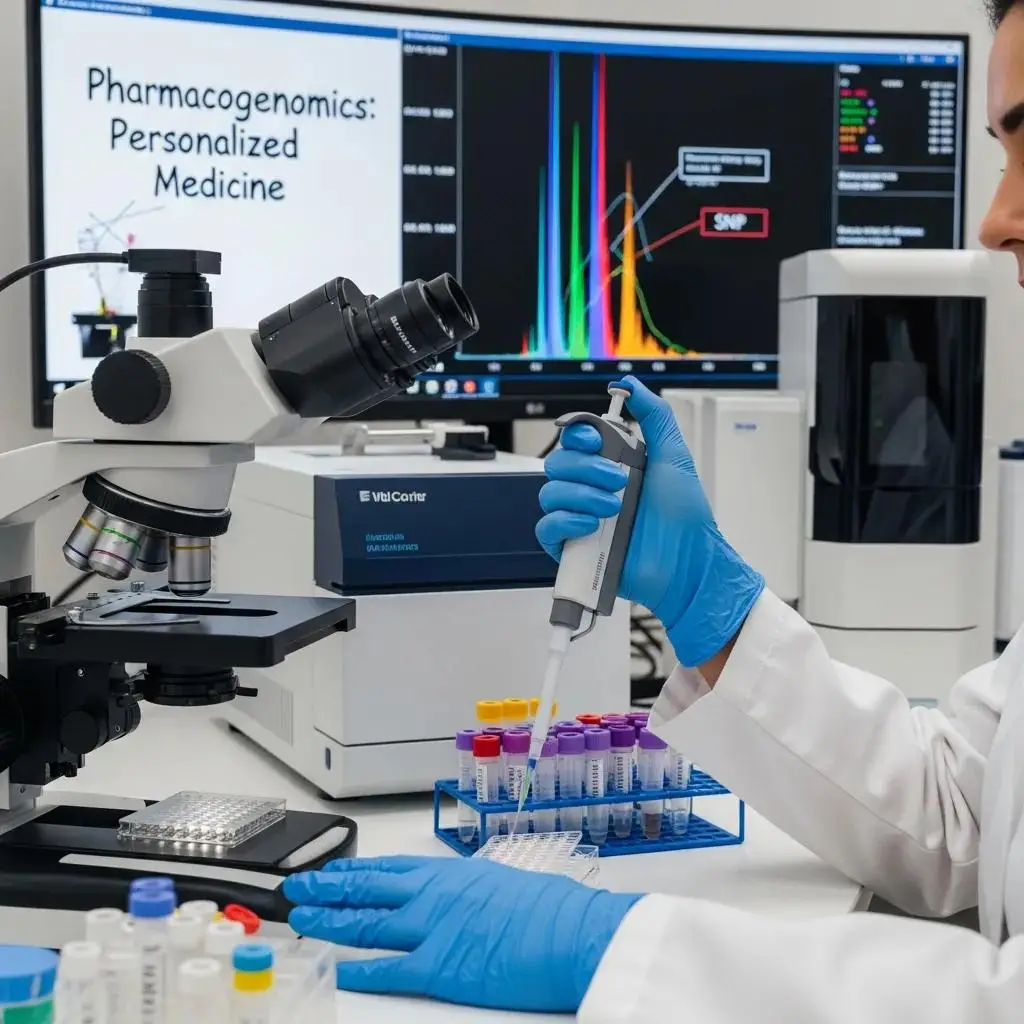
Pharmacogenomics studies how genetic differences affect drug metabolism, targets, and transport. These variants can cause drugs to be cleared too quickly, to build up to risky levels, or to bind differently at their targets. Testing turns that genetic information into practical guidance clinicians and pharmacists use to pick medicines or adjust doses. Results can show whether a standard dose is appropriate, whether a different drug is safer, or whether a compounded formulation is preferable. The table below links common genes to affected drug classes and typical clinical actions.
This table links specific genes or markers to drug classes and practical actions clinicians often take after test results.
| Gene / Marker | Drug class affected | Typical clinical action or dosing note |
|---|---|---|
| CYP2D6 | Antidepressants, opioids | Consider alternative agents or lower doses for poor metabolizers |
| CYP2C19 | Antiplatelets, proton-pump inhibitors | Use alternative antiplatelet therapy or choose a different agent |
| VKORC1 / CYP2C9 | Warfarin (anticoagulant) | Use genotype-guided starting doses and closer INR follow-up |
Results always need clinical context. Coordination between prescribers and pharmacists helps translate genetic findings into safe medication changes. The next section describes how testing improves outcomes in real practice.
Pharmacogenomics of Drug Metabolism: Tailoring Treatments with Genetic Insights
Key variants in drug-metabolizing enzymes and transporters vary in frequency across populations and can cause meaningful differences in drug response and toxicity. Pharmacogenomics seeks to identify these differences so clinicians can optimize drug choice and dose for each patient, improving outcomes and reducing adverse reactions.
Pharmacogenomics of drug metabolizing enzymes and transporters: relevance to precision medicine, Z Zhou, 2016
What Role Do Genes Play in Medication Response?
Genes affect how drugs are absorbed, metabolized, transported, and how targets respond in cells. A metabolic enzyme variant might let a drug accumulate to toxic levels or clear it so fast the drug has little effect. Receptor differences can blunt or amplify a drug’s impact. These mechanisms explain why two people on the same medicine and dose can have very different results. Knowing these pathways lets clinicians pick safer alternatives or adjust dosing before adverse events occur, reducing guesswork in prescribing.
Pharmacogenomics of Drug-Metabolizing Enzymes: Clinical Implications for Personalized Therapy
Interindividual differences in drug disposition are a major cause of adverse reactions and treatment failure. Many phase I and II drug-metabolizing enzymes are polymorphic and significantly influence therapy outcomes. Recent genome-wide and targeted studies have expanded our understanding of how genetic variation affects drug metabolism and response, offering clinically useful insights for patient care.
Pharmacogenomics of drug-metabolizing enzymes: a recent update on clinical implications and endogenous effects, 2013
How Can Pharmacogenomic Testing Improve Treatment Outcomes?
Pharmacogenomic testing turns genetic variants into clear, actionable recommendations. The typical workflow includes sample collection, lab analysis, a structured report with clinical guidance, and implementation through prescribing or pharmacy-managed adjustments. Research shows genotype-guided approaches can lower adverse events and shorten the time to an effective dose for multiple drug classes. When a pharmacy coordinates testing and compounding, patients often experience a smoother path from result to a personalized medication.
Pharmacogenomic Testing for Warfarin Dosing: Improving Accuracy and Efficiency
Multiple studies indicate that genetic polymorphisms account for a substantial portion of warfarin dosing variability. Integrating pharmacogenomic information can improve initial dose estimates and reduce the need for frequent clinic visits and laboratory adjustments. Evidence for a clear reduction in serious bleeding is limited, and cost-effectiveness studies generally show a modest positive effect, particularly for patients who require unusually high or low doses. Pharmacists—especially in community settings—can educate clinicians and patients on testing and help implement genotype-informed dosing protocols.
Clinical applications of pharmacogenomics guided warfarin dosing, 2011
How Does Value Drugstore Deliver Personalized Compounding Services?
Value Drugstore brings personalized medicine to the neighborhood by offering custom compounding, allergen-free options, and telehealth coordination that links genomic insights to medication solutions. As a family-focused community pharmacy, we turn clinician recommendations into precisely dosed capsules, alternative delivery forms, and formulations that avoid specific excipients for patients with sensitivities. Our process emphasizes coordination—assessment, prescription confirmation, compounding, counseling, and follow-up—so tailored therapies meet clinical goals. Custom formulations help when commercial products don’t fit a patient’s needs.
Below is a compact summary of compounding services, the problems they solve, and real-world patient benefits.
| Service type | Problem it solves | Patient benefit / example use |
|---|---|---|
| Dose customization | Nonstandard dosing needs for children or older adults | Accurate dosing that improves safety and adherence |
| Allergen-free formulations | Sensitivities to dyes, gluten, or preservatives | Allows treatment without reaction to unwanted ingredients |
| Alternative delivery forms (topical, liquid) | Difficulty swallowing pills or need for targeted therapy | Easier administration and localized effect |
| Telehealth coordination | Remote assessment and clinician-pharmacy communication | Faster implementation of personalized prescriptions |
Value Drugstore follows clear patient steps to prepare compounded medications and provide ongoing support. Schedule a consultation to start a personalized plan with our compounding team.
What Are Custom Medications and Allergen-Free Formulations?
Custom medications are pharmacist-prepared formulations made to a patient’s specific dose, route, or ingredient needs when commercial products aren’t suitable. Allergen-free formulations remove common excipients—like dyes, gluten, or preservatives—to avoid reactions and improve tolerability. Examples include dye-free capsules for children, preservative-free liquids for sensitive patients, and gluten-free fillers for people with celiac disease. These options expand safe therapeutic choices and help patients stay on treatment.
How Does the Patient Journey Work for Personalized Compounding?
The patient journey starts with a clinical assessment and a prescription indicating the need for a custom formulation. A pharmacist reviews the order and consults with the prescriber and patient to confirm details. The pharmacy compounds the medication to specification, performs quality checks, and provides counseling on use, storage, and monitoring. Follow-up ensures the formulation meets clinical goals and allows dose adjustments or refills as needed.
- Consultation: Clinician or patient discusses the need for a custom medication.
- Prescription/Coordination: Pharmacist confirms formulation details with the prescriber.
- Compounding: The medication is prepared to the agreed specifications.
- Counseling & Follow-up: The patient receives instructions and ongoing monitoring.
These steps help maintain safety, clarity, and continuity of care before moving into preventive strategies like nutrition optimization.
How Can Genomic Testing and Precision Nutrition Support Your Health?

Genomic testing for wellness can reveal markers related to nutrient metabolism, food sensitivities, and metabolic risk—information that supports precision nutrition plans tailored to your biology. When genetic data is combined with clinical labs and lifestyle factors, clinicians and pharmacists can prioritize interventions (like nutrient repletion or dietary pattern changes) that are more likely to succeed for an individual. Precision nutrition can support weight management, metabolic health, and medication effectiveness when nutrient–drug interactions are a concern. Below are common test categories community providers reference for wellness planning.
This table outlines typical test categories, what they show, and how results translate into practical recommendations.
| Test category | What it reveals | Practical recommendation |
|---|---|---|
| Pharmacogenomic panels | How you metabolize and respond to medications | Adjust drug choice or dosing to reduce side effects |
| Nutrigenomic screens | Variants that affect nutrient needs and metabolism | Personalize supplement choices and dietary guidance |
| Metabolic risk markers | Predisposition to dyslipidemia or insulin resistance | Prioritize lifestyle changes and targeted nutrient support |
Community pharmacies can help interpret results and recommend individualized supplement plans or coordinate with clinicians to make changes. Value Drugstore can be a convenient point of contact to explore testing and tailored supplement strategies when appropriate.
What Genetic Tests Does Value Drugstore Recommend for Wellness?
For many patients, a broad pharmacogenomic panel helps guide medication decisions, while nutrigenomic screens clarify nutrient metabolism and food–response patterns. Pharmacogenomic panels identify genes tied to drug metabolism and support safer prescribing; nutrigenomic tests highlight markers that affect vitamin processing, lipid handling, or carbohydrate response. These categories help clinicians and pharmacists focus interventions that match a patient’s biology. Value Drugstore can help you decide which test best fits your needs.
How Are Individualized Supplement Plans Created for Optimal Health?
Individualized supplement plans begin with an assessment of genetic markers, clinical labs, diet, and lifestyle to identify deficiencies or metabolic tendencies. From there, clinicians or pharmacists select targeted supplements—such as vitamin D, B vitamins, or omega‑3s—and determine dosing based on clinical context and monitoring. Plans include scheduled reassessment to track response and adjust doses or formulations, ensuring long-term benefit. Ongoing coordination between clinicians and pharmacies helps keep supplementation safe and outcome-focused.
Frequently Asked Questions
What is the role of community pharmacies in personalized medicine?
Community pharmacies connect genetic insights to everyday care. We offer compounding, help arrange and interpret pharmacogenomic testing, and coordinate with clinicians to implement personalized treatment plans. By making medications that fit a patient’s needs and explaining test results in plain language, community pharmacies help improve adherence and outcomes.
How can patients access pharmacogenomic testing?
Patients can get pharmacogenomic testing through their clinician or through community pharmacies that offer testing services. A clinician usually evaluates your history to decide if testing is useful. Samples (saliva or blood) are sent to a lab, and healthcare professionals interpret the results and recommend medication or dose changes to make treatments safer and more effective.
What are the potential risks of not using personalized medicine?
Without personalized medicine, patients may face ineffective treatments, more adverse drug reactions, and longer periods of trial-and-error prescribing. Standard medications may not account for a person’s genetics, leading to suboptimal outcomes or delayed interventions for at‑risk individuals. Personalized approaches aim to reduce these risks by tailoring care to the individual.
How does nutrition play a role in personalized medicine?
Nutrition is a key part of personalized care. Nutrigenomic testing can show how a person metabolizes nutrients and responds to foods, allowing providers to design diet and supplement plans that support health goals and medication effectiveness. Aligning nutrition with genetic and clinical data improves the odds of meaningful, lasting results.
What should patients expect during the personalized compounding process?
Expect a thorough review of your medical history, current medications, and specific needs. After a prescription is confirmed, pharmacists prepare the custom formulation and perform quality checks. You’ll receive counseling on how to take the medication, storage tips, and follow-up plans. This collaborative approach ensures the compounded product is safe, effective, and tailored to your goals.
Are there any limitations to personalized medicine?
Personalized medicine offers clear advantages but has limits. Not every condition has a proven personalized treatment, and access to genetic testing varies. Interpreting genetic data can be complex and requires trained professionals. There are also valid concerns about genetic privacy and equitable access. Still, research and technology are steadily expanding what personalized care can offer.