Senior Home Safety & Fall Prevention Checklist

Effective Fall Prevention Strategies for Seniors — Practical Tips to Keep Older Adults Safe
Falls are a top cause of injury for older adults — but many are preventable. This guide outlines a multifaceted approach that targets physical fitness, the home environment, and medication-related risks. You’ll find clear, practical steps caregivers and seniors can take: simple lifestyle changes, balance and strength exercises, a medication review process, targeted home modifications, and guidance on assistive devices and technologies. We map short exercise options, checklists for home safety and device selection, and explain when to involve pharmacists, physical therapists, or vision specialists so seniors can stay safer and more independent.
What Are the Most Important Fall Prevention Tips for Elderly Adults?
Preventing falls works best when several proven strategies are used together. Focus first on modifiable risks: vision, medications, the environment, footwear, and muscle strength. Even a few practical changes — clearing walkways, wearing supportive shoes, getting routine vision checks, and doing targeted exercises — can noticeably lower fall risk. The sections below break these topics into straightforward lifestyle steps and exercise routines you can start right away.
Quick-start checklist — top actions to try today:
- Keep indoor and outdoor walking paths clear and well lit.
- Schedule regular eye exams and update glasses when needed.
- Review all medications with a clinician or pharmacist to spot drugs that raise fall risk.
- Start a gentle balance and strength routine, for example Tai Chi or sit-to-stand exercises.
These simple priorities give seniors and caregivers an immediate plan to reduce hazards and build long-term resilience against falls.
Which Lifestyle Changes Can Reduce Fall Risk in Seniors?
Lifestyle changes address the sensory, nutritional, and behavioral factors that increase fall risk. Regular eye checks and timely treatment for cataracts or refractive errors restore important visual cues for safe walking. Slip-resistant, supportive shoes help steady gait. Eating for bone and muscle health — enough protein, calcium, and vitamin D — strengthens recovery from stumbles. Staying hydrated, limiting alcohol, and managing chronic conditions also help prevent dizziness and blood-pressure swings that can lead to falls.
- Vision care: Get eye exams at least every 1–2 years and correct vision problems promptly.
- Nutrition: Aim for adequate protein, calcium, and vitamin D each day.
- Footwear: Choose low-heeled, non-slip shoes with good support.
Combining these lifestyle steps with exercise-based balance work gives the best protection against falls.
How Do Balance and Strength Exercises Help Prevent Falls?
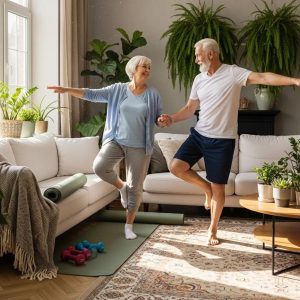
Balance and strength exercises lower fall risk by improving muscle power, proprioception, and reaction time — all needed to recover from trips. Activities like Tai Chi, repeated sit-to-stand, heel-to-toe walking, and single-leg stands build functional strength in the hips and legs and retrain neuromuscular control. Start with short daily sessions (10–20 minutes), increase slowly, and see a physical therapist if you’ve had recent falls or feel unstable. Safety, gradual progression, and consistent practice are the keys to lasting improvement.
Begin with gentle, low-impact moves and add repetitions over time; a therapist can customize routines for mobility level and coexisting health issues. Better balance works together with home and medication changes to form a layered defense against falls.
How Can Medication Review Reduce Fall Risk in Older Adults?
A medication review systematically checks all prescription and over-the-counter drugs to identify fall-risk-increasing drugs (FRIDs), dangerous interactions, and chances to simplify therapy. Many FRIDs cause sedation, dizziness, or orthostatic hypotension; reducing or switching these medicines lowers physiological contributors to falls. Benefits include fewer side effects, less polypharmacy, and dosing tailored to an older person’s mobility and cognitive needs.
The table below summarizes the medication classes most often linked to falls, their common adverse effects, and how they increase fall risk.
| Medication Class | Common Side Effect(s) | How It Raises Fall Risk |
|---|---|---|
| Sedative-hypnotics (benzodiazepines) | Drowsiness, slowed reflexes | Reduces alertness and reaction time, making stumbles more likely |
| Antidepressants (tricyclics, some SSRIs) | Dizziness, sedation | Can disrupt balance and blood-pressure control, causing instability |
| Antihypertensives (e.g., alpha-blockers) | Orthostatic hypotension | Sudden blood-pressure drops can cause fainting or lightheadedness |
| Opioid analgesics | Sedation, impaired coordination | Decreases neuromuscular control and alertness |
| Anticholinergics | Confusion, blurred vision | Impairs cognition and vision, reducing hazard awareness |
What Are Fall-Risk-Increasing Drugs and Their Effects?
Fall-risk-increasing drugs (FRIDs) span several classes that affect balance, cognition, or blood pressure. Common examples include sedative-hypnotics, certain antidepressants, some blood-pressure medicines, opioids, and drugs with anticholinergic effects. These medications often cause sedation, dizziness, poor coordination, or orthostatic hypotension — all of which reduce a person’s ability to recover from a trip or position change. Identifying FRIDs creates opportunities for deprescribing or safer substitutions.
Start a review by listing all medicines and noting side effects like daytime drowsiness or lightheadedness; that helps clinicians prioritize which drugs to change. The next section explains how a pharmacist-led review typically works and what to expect.
Recent research highlights the link between anticholinergic burden and increased fall risk in older adults.
Clinical Pharmacist Role in Minimizing Anticholinergic Drug Burden and Fall Risk
This study examined fall risk using the Aachen Falls Prevention Scale and evaluated clinical pharmacist interventions to lower anticholinergic drug burden and related fall risk in older adults.
Patients seen at a university hospital geriatric outpatient clinic who were taking at least one anticholinergic medication were assessed in retrospective and prospective groups by a clinical pharmacist. Anticholinergic burden was measured with the Anticholinergic Cognitive Burden Scale, and the Aachen Falls Prevention Scale was used for fall-risk assessment in the prospective group.
A total of 601 patients were included. Risk of falls increased 2.50 times in patients with high anticholinergic burden (OR (95% CI) = 2.503 (1.071–5.852); p = 0.034), and a prior history of falls raised the likelihood of high anticholinergic burden 2.02 times (OR (95% CI) = 2.026 (1.059–3.876); p = 0.033). In the prospective phase, each unit increase in the fall scale score increased the risk of high anticholinergic burden by 22% (p = 0.028). Anticholinergic burden was significantly reduced following pharmacist interventions in the prospective phase (p = 0.010).
The study shows that involving a clinical pharmacist in geriatric care helps detect, reduce, and prevent anticholinergic adverse effects.
How Does a Pharmacist-Led Medication Review Work?
A pharmacist-led medication review typically follows three steps: medication reconciliation, risk identification, and collaborative optimization with prescribers. First, the pharmacist documents every medicine, including OTCs and supplements. Next, they identify FRIDs, duplications, and interactions and assess dosing in light of age-related changes. Finally, the pharmacist suggests deprescribing, dose adjustments, or safer alternatives and sets a monitoring plan.
Expected outcomes include fewer adverse effects, reduced interactions, and lower fall risk from a simpler, safer regimen. Many community pharmacies offer telehealth reviews and prescription coordination to support ongoing safety. For example, Value Drugstore highlights personalized medication management and pharmacist-led optimization as practical ways to reduce fall risk, offering services like medication review and telehealth consultations to help seniors and families act on recommendations.
Community pharmacists are well positioned to evaluate fall risk and help implement prevention strategies for older adults.
Community Pharmacist-Led Falls Risk Evaluation for Seniors
This study examines how fall-risk-increasing drugs are used among older people and proposes a model and toolkit that could be implemented in community pharmacy settings to support fall-risk screening and intervention.
Community pharmacist-led falls risk evaluation, 2023
What Home Safety Modifications Are Essential for Senior Fall Prevention?

Home changes remove the environmental hazards that often trigger falls. Start with high-impact fixes like bathroom grab bars and secure stair handrails. Improving lighting, clearing pathways, securing rugs, and adding non-slip surfaces can prevent common trips and slips. Prioritize a plan that tackles bathrooms and stairs first — those yield quick safety gains and reduce serious injury risk. The sections that follow list common hazards and practical modifications to address them.
Common household hazards and recommended fixes are summarized below to guide immediate action.
| Home Area | Hazard | Recommended Modification |
|---|---|---|
| Bathroom | Slippery floors, no hand support | Install grab bars, use non-slip mats, consider a raised toilet seat |
| Stairs | Missing handrail, poor lighting | Add sturdy handrails (at least one side) and improve stair lighting |
| Entryways & Halls | Loose rugs, cluttered walkways | Remove or secure rugs with non-slip backing and keep paths clear |
| Living Areas | Poorly defined step edges, loose cords | Mark step edges with contrast, tuck cords away, add night lighting |
Which Environmental Hazards Should Be Addressed in Senior Homes?
Look for and fix household hazards that commonly cause falls: loose rugs, cluttered paths, poor lighting, and slippery bathroom floors. Small, immediate changes — removing loose rugs, securing cords, and adding night lights — cut trip risks significantly. Start with entryways and stairs since many accidents happen during normal movements. These quick fixes are most effective when paired with longer-term features like grab bars and handrails to build layered protection.
After removing hazards, the next step is installing durable safety features that keep the improvements in place over time.
What Are the Best Home Modifications to Improve Safety?
Choose modifications that offer strong safety benefits for reasonable cost: add grab bars in showers and beside toilets, install non-slip flooring or mats in wet areas, fit handrails on stairs, and improve general and task lighting. Ramps and removing thresholds help when mobility devices are used. Professional installation ensures correct placement and secure anchors. Consult an occupational therapist or certified installer for complex needs or a personalized assessment.
- Install grab bars at recommended heights and use non-slip surfaces in bathrooms.
- Upgrade lighting with bright, even fixtures and add motion-sensor night lights.
- Secure stair handrails firmly and apply contrast strips to step edges.
These upgrades lower environmental risk and work best alongside exercise and medication strategies.
Which Assistive Devices Support Mobility and Prevent Falls in Seniors?
Assistive devices help steady balance, redistribute weight, and offer support to reduce falls. The right choice depends on gait speed, balance problems, and the home layout. Options range from fixed grab bars to canes, walkers, rollators, and wearable fall detectors. Proper fitting and training make these tools effective; a physical or occupational therapist can match the device to the user’s needs. The table below clarifies when to consider each option.
| Device | Primary Benefit | When to Consider |
|---|---|---|
| Cane | Single-point support to aid balance | Mild, one-sided weakness or balance concerns |
| Walker (standard/rollator) | Wider base for stability; rollators offer a seat | More pronounced weakness or frequent fatigue while walking |
| Grab Bars & Handrails | Fixed support for transfers and stairs | Bathrooms, showers, and stairways needing steady support |
| Fall Detection Wearables | Faster emergency response after a fall | Lives alone or has high fall risk and needs quick assistance |
How Do Canes, Walkers, and Grab Bars Help Reduce Fall Risk?
Canes and walkers widen the base of support and shift weight to compensate for weakness or balance issues; grab bars give fixed points for safer transfers and stair navigation. Choosing the correct device depends on gait and strength — a cane suits mild, one-sided problems, while walkers support broader instability. A physical therapist can assess gait, recommend the right device and fit, and teach safe use so the equipment reduces rather than increases fall risk.
For best results, use devices consistently and combine them with strength and balance training plus environmental fixes.
What Technology and Alert Systems Enhance Senior Safety?
Technology complements physical and environmental measures by speeding help after a fall and providing monitoring that supports independence. Options include wearable fall detectors, emergency alert pendants, and in-home sensor systems that notify responders automatically. Wearables travel with the person and work outside the home; in-home sensors track movement patterns and can flag unusual inactivity. When choosing technology, consider cost, privacy, battery life, false positives, and whether detection is automatic or manual.
Select tech after assessing the living situation and daily routines so it helps without adding complexity. Combining alerts with pharmacist-led medication reviews and regular check-ins creates an extra safety layer — community pharmacies like Value Drugstore offer personalized medication management and telehealth support that can work alongside these systems to lower fall risk.
Frequently Asked Questions
What role does nutrition play in fall prevention for seniors?
Good nutrition supports bone and muscle health, both critical to preventing falls. A diet with adequate protein, calcium, and vitamin D helps maintain strength and bone density, improving recovery from stumbles. Staying hydrated and limiting alcohol also prevents dizziness and keeps alertness up. Seniors should focus on nutrient-dense foods and may benefit from a nutritionist’s guidance to create a plan that supports mobility and reduces fall risk.
How can family members support seniors in fall prevention efforts?
Family members can make a big difference by helping remove home hazards, improving lighting, and installing safety features like grab bars. They can encourage regular exercise, assist with medication reviews, and go with seniors to appointments. Regular check-ins and emotional support reduce isolation and help seniors stay active and safe.
What types of exercises are most effective for improving balance in seniors?
Exercises that challenge stability and coordination work best. Try Tai Chi, yoga, heel-to-toe walking, single-leg stands, and balance-board activities. Strength exercises for the legs and core, such as squats and leg lifts, also help. Start slowly and consult a physical therapist for personalized recommendations based on ability and health conditions.
How often should seniors have their vision checked to prevent falls?
Seniors should see an eye care professional at least every one to two years, or sooner if vision changes. Regular exams catch cataracts, glaucoma, and refractive errors that can impair depth perception and increase fall risk. Prompt correction with glasses or treatment improves safety and mobility.
What are some common misconceptions about fall prevention in seniors?
One common myth is that falls are an unavoidable part of aging — in truth, many falls can be prevented with proactive steps like exercise, home modifications, and medication reviews. Another misconception is that seniors should avoid activity to stay safe; regular, appropriate exercise actually builds strength and balance. Some also view assistive devices as a sign of weakness, but when used correctly they increase independence and safety.
How can technology assist in fall prevention for seniors?
Technology can help by providing monitoring and fast response. Wearable fall detectors and emergency pendants can alert help after a fall. In-home sensors can spot unusual inactivity and prompt a caregiver check-in. Smartphone apps can remind seniors to take medicines or do exercises, helping combine daily health management with safety measures so seniors can live more independently.