Wegovy: Pill vs. Shot — Which One Fits Your Life?
Wegovy: Pill vs. Shot — Which One Fits Your Life?
Date: February 3, 2026
Author: Mike Luong, Pharm.D., MBA
1. Introduction: The GLP-1 Price War of 2026
If you’d told someone in 2024 that, two years later, brand-name GLP-1 weight-loss medicine could be bought out-of-pocket for under $150 a month, most people wouldn’t have believed it. Back then shortages were common, insurers often denied coverage, and out-of-pocket bills could approach $1,300.
Jump to 2026 and the scene has shifted. We’re in what many call the “GLP‑1 Price War” — heavy competition that finally favors shoppers and patients.
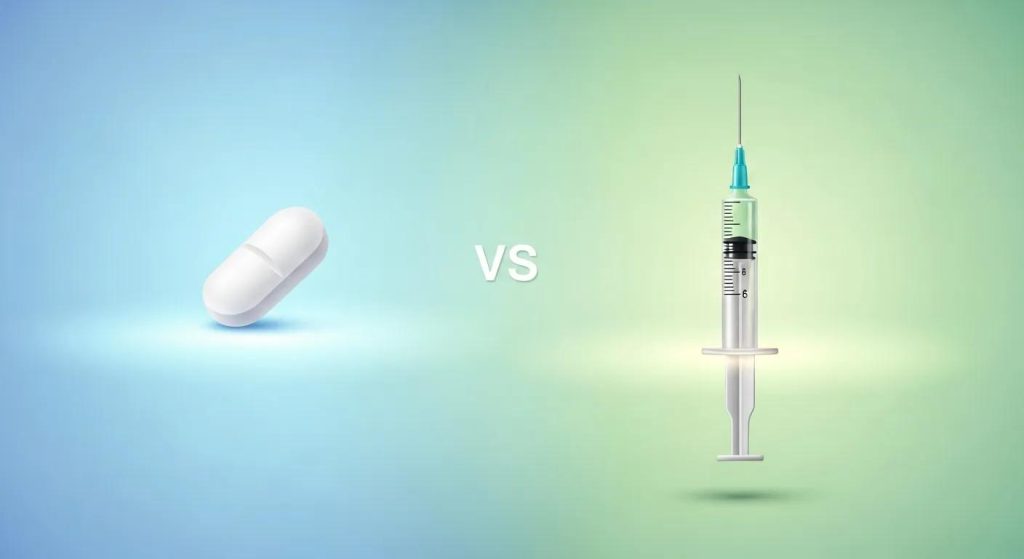
For years the choice was framed as needles versus convenience. Now cost and access matter just as much. The Needle vs. Pill conversation has moved from preference to practicality.
2. The Oral Revolution: Understanding the Wegovy Pill
To see why the tablet matters, start with how things used to be. Rybelsus, an earlier oral semaglutide for type 2 diabetes, went up to 14 mg. It helped blood sugar but didn’t usually match higher-dose injections for weight loss.
The 2026 “Wegovy Tablet” is different — reformulated and dosed specifically for weight management rather than just glucose control.
Its titration ramps faster: you start at 1.5 mg, move to 4 mg, then 9 mg, and ultimately reach the therapeutic 25 mg daily dose.
The Science: Why the dose is so high
Why a 25 mg pill when the injection dose is 2.4 mg?
It comes down to bioavailability. Injected semaglutide goes nearly directly into the bloodstream. Swallowed protein drugs face stomach acid and digestive enzymes that destroy most of the dose — roughly 99% is lost before absorption.
The oral Wegovy isn’t a new molecule so much as new delivery technology. A much larger pill dose makes up for digestive loss so enough active drug reaches circulation to suppress appetite.
![[IMAGE: Infographic comparing absorption — injection → near‑complete bloodstream uptake (~99%); pill → most lost in stomach (~1% absorption) with a small arrow to circulation.]](https://myvaluedrugstore.com/wp-content/uploads/2026/02/87e0df55-df9b-41d5-a774-af1b1b20a549-1024x559.jpg "87e0df55-df9b-41d5-a774-af1b1b20a549webp - Value Drugstore: Your Local Family Pharmacy in Baltimore, MD")
3. Cost Deep Dive: The $149 Starter Offer
Here’s what grabbed attention: the $149 starter price you may see on Value Drugstore, GoodRx, and price aggregators is real — but it has limits.
That $149 is a self-pay introductory offer that covers the initial ramp-up — the 1.5 mg and 4 mg stages that help your body acclimate. Practically, it’s a low-cost way to begin on the oral path instead of injections.
The "Price Cliff"
Industry watchers call the promotion’s downside the “Price Cliff.” The intro rate usually ends after two months or on a set expiration date (this coupon wave runs through April 15th, 2026).
Maintenance Costs
When you reach maintenance dosing — 9 mg and especially the 25 mg — your out-of-pocket cost rises. In 2026 the average cash price for the 25 mg maintenance tablet is about $299 per month. That’s roughly double the starter promo but still far below the four-figure bills many faced in earlier years.
4. The Injection Counter-Attack: Wegovy & Ozempic Pricing
Makers of injectable GLP‑1s moved fast. As patients began choosing the cheaper pill, manufacturers rolled out new self-pay tiers for injections to stay competitive.
In 2026 you can find starter packs for injection pens near $199 — higher than the pill promo, but close enough to slow the shift.
That said, the economics matter: making sterile pens and delivery devices costs more than tablets. The 2.4 mg weekly shot still carries a premium compared with the 25 mg daily pill.
2026 Cash Price Side-by-Side Comparison (Monthly Avg.)
| Dosage Stage | Oral Wegovy (Pill) | Injectable Wegovy (Shot) |
|---|---|---|
| Starter Doses | $149 (Promo Price) | $199 (New Tier Price) |
| Maintenance Dose | $299 (25mg daily) | $550 – $700 (2.4mg weekly) |
Prices shown are average self-pay rates and do not include insurance.
5. Effectiveness: Does the $149 Pill Actually Work?
Short answer: yes — when it’s used correctly. The long answer depends on how you take it.
Head-to-head trials from 2025–2026 showed the 25 mg oral dose produced weight-loss results similar to the 2.4 mg injectable over a 68‑week period.
But trials assume near‑perfect use. In daily life the pill has an Achilles’ heel: the “Absorption Tax.”
Miss a weekly shot and you lose some momentum, but the injection’s long half-life softens the impact. Miss a single daily pill, take it with food, or use it incorrectly, and that day’s dose may be effectively zero.
Also, about 10–15% of people are “oral non‑responders” — their digestion or absorption prevents enough drug from getting into circulation. For them, the injection remains the more reliable option.
6. Lifestyle & Logistics: The Hidden Costs
Saving roughly $150 a month is appealing, but the oral option asks for daily attention.
The 30-Minute Rule
To capture that small fraction of absorption, take the pill on an empty stomach with no more than 4 ounces of plain water. Then wait at least 30 minutes before eating, drinking coffee, or taking other meds — 60 minutes is safer.
For many people that shifts morning routines. Ask yourself: is the monthly savings worth waking earlier to protect absorption?
Storage & Travel
Where the pill clearly wins is travel and storage. No refrigeration, no worries about frozen pens, and no TSA liquid hassles. For frequent travelers or anyone who dislikes carrying refrigerated injections, the pill is much easier.
![[IMAGE: Bedside scene — alarm at 6:00 AM, a single pill beside a small glass of water, and a note reminding “WAIT 30–60 MINUTES BEFORE COFFEE.”]](https://myvaluedrugstore.com/wp-content/uploads/2026/02/cf62f9d9-4191-4dfc-bf90-1e6bf71b9e60-1024x559.jpg "cf62f9d9-4191-4dfc-bf90-1e6bf71b9e60webp - Value Drugstore: Your Local Family Pharmacy in Baltimore, MD")
7. Insurance & Coupons: Navigating the 2026 Landscape
Even with lower cash prices, insurance often remains the cheapest long-term route.
In 2026 manufacturers pushed stronger coupons for commercially insured patients — especially for the pill. If your plan covers the drug, coupons can reduce your monthly co-pay to as little as $25.
That said, many plans still exclude weight‑loss meds. The cheaper cash price for the pill is a direct response: it gives people an option when insurance won’t help.
You’ll also see broader pricing shifts from policy ideas floated earlier in the decade, like “Most Favored Nation” concepts, nudging U.S. prices a bit closer to international levels and helping make a $299 maintenance price feasible.
8. The Compounding Question
Did the $149 pill kill the gray market for compounded semaglutide? Not entirely, but it cut demand significantly.
In 2024 many people turned to compounding pharmacies because brand-name supplies were scarce and prices were sky-high. With an FDA‑approved starter at $149 and maintenance around $299, the risk‑vs‑reward for compounding changed. Today compounding is mostly limited to niche needs like very specific micro‑doses.
9. Conclusion: Which One Should You Choose?
The GLP‑1 landscape in 2026 is healthier than it was two years ago. Real choices exist now.
Choose the Wegovy Pill (The “Budget Pick”) if:
- You’re paying out of pocket and need lower monthly costs (roughly $299 vs. $600+ for maintenance).
- You travel often and don’t want to manage refrigeration.
- You can reliably follow a strict empty‑stomach morning routine.
Choose the Injection (The “Efficacy Pick”) if:
- Your insurance keeps co‑pays minimal.
- You prefer a weekly, one‑and‑done approach instead of daily pills.
- You’ve tried oral GLP‑1s and suspect you’re an oral non‑responder.
Final verdict: the $149 Wegovy pill starter is one of the best access points we’ve seen recently. It lowers the barrier to a medication that can be life‑changing. The pill requires a bit more daily attention than the shot, but for many people the financial and practical benefits make it a smart way to begin a weight‑loss journey in 2026.
Frequently Asked Questions
1. What are the main differences in side effects between the Wegovy pill and the injection?
Both forms use semaglutide, so common side effects overlap: nausea, vomiting, diarrhea, and stomach pain. Some people report fewer GI symptoms with the injection, likely because more drug reaches the bloodstream. Individual experiences vary — discuss expectations with your clinician.
2. Can I switch from the injection to the pill, or vice versa?
Yes. Switching is possible but should be managed by a healthcare provider. Your clinician will guide timing and dosing to keep treatment effective while minimizing side effects. Plan for monitoring during the transition.
3. Are there any dietary restrictions while taking the Wegovy pill?
There aren’t broad food bans, but the pill must be taken on an empty stomach with no more than 4 ounces of plain water, followed by a 30–60 minute wait before eating or taking other meds. A nutritionist can help you plan meals around this routine to protect absorption.
4. How does the Wegovy pill affect long-term weight maintenance?
Clinical data show semaglutide can support long-term weight loss when continued. Long-term success still depends on consistent use plus lifestyle changes like diet and exercise. Regular check-ins with your healthcare team help keep a sustainable plan on track.
5. What should I do if I miss a dose of the Wegovy pill?
If you miss a dose, take it as soon as you remember unless it’s almost time for your next dose. Don’t double up. Because the pill is daily and absorption matters, build a routine to reduce missed doses.
6. Is the Wegovy pill suitable for everyone looking to lose weight?
No. Wegovy is generally for adults with BMI ≥30, or BMI ≥27 with weight‑related health conditions. People with certain histories (for example, pancreatitis or specific thyroid cancers) should avoid it. A clinician can determine if it’s right for you.
7. How do I find out if my insurance covers the Wegovy pill?
Contact your insurer or check your plan documents. Coverage for weight‑loss medications varies and may require prior authorization. Your prescriber’s office can often help with insurance navigation and locating manufacturer coupons to lower costs.